Termite: Difference between revisions
CSV import |
CSV import |
||
| Line 31: | Line 31: | ||
{{stub}} | {{stub}} | ||
<gallery> | |||
File:Coptotermes_formosanus_shiraki_USGov_k8204-7.jpg|Coptotermes formosanus shiraki | |||
File:Mastotermes_darwiniensis.jpg|Mastotermes darwiniensis | |||
File:Isoptera.jpg|Isoptera | |||
File:TermiteAnatomy.png|Termite Anatomy | |||
File:ZooKeys-148-105-g003_Parastylotermes_krishnai.jpg|Parastylotermes krishnai | |||
File:Termite_vs_Ant_Developmental_biology.png|Termite vs Ant Developmental Biology | |||
File:Termite-by-RalfR.jpg|Termite by RalfR | |||
File:20200403_Termite_and_shed_wings_on_interior_window_sill.png|Termite and shed wings on interior window sill | |||
File:Flying_Termites_after_rain.jpg|Flying Termites after rain | |||
File:Egg_grooming_behaviour_of_Reticulitermes_speratus_workers_in_a_nursery_cell_-_pone.0000813.s006.ogv|Egg grooming behaviour of Reticulitermes speratus workers in a nursery cell | |||
File:Termite_Fecal_Pellets.jpg|Termite Fecal Pellets | |||
File:Prot_flag_trichonymphid_2_reticulotermes.jpg|Prot flag trichonymphid 2 reticulotermes | |||
</gallery> | |||
Latest revision as of 21:39, 23 February 2025
Termite
Termites are eusocial insects that are classified at the taxonomic rank of infraorder Isoptera, or as epifamily Termitoidae within the cockroach order Blattodea. Termites were once classified in a separate order from cockroaches, but recent phylogenetic studies indicate that they evolved from close ancestors of cockroaches during the Jurassic or Triassic. However, the first termites possibly emerged during the Permian or even the Carboniferous.
Description[edit]
Termites are usually small, measuring between 4 to 15 millimeters (0.16 to 0.59 in) in length. The largest of all extant termites are the queens of the species Macrotermes bellicosus, measuring up to over 10 centimetres (4 in) in length. Most termites are blind, relying on their other senses such as pheromones, touch, and vibration (via signals transmitted through the colony and its structure) for communication.
Ecology and behavior[edit]
Termites are known for their destructive effects on wooden structures and construction. Through statistical estimates, termites are the cause of over $5 billion in damages annually in the United States alone. Individually, termites are not impressive insects. Collectively, however, they represent a significant threat to many types of human structures.
Reproduction[edit]
Termites are among the most successful groups of insects on Earth, colonizing most landmasses except for Antarctica. Their colonies range in size from a few hundred individuals to enormous societies with several million individuals. Termite queens have the longest lifespan of any insect in the world, with some queens reportedly living up to 30 to 50 years.
See also[edit]
References[edit]
<references />
External links[edit]
 | |
|---|---|
 |
 |
-
 Coptotermes formosanus shiraki
 -
 Mastotermes darwiniensis
 -
 Isoptera
 -
 Termite Anatomy
 -
 Parastylotermes krishnai
 -
 Termite vs Ant Developmental Biology
 -
 Termite by RalfR
 -
 Termite and shed wings on interior window sill
 -
 Flying Termites after rain
 -
 Egg grooming behaviour of Reticulitermes speratus workers in a nursery cell
 -
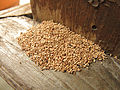 Termite Fecal Pellets
 -
 Prot flag trichonymphid 2 reticulotermes


