Poster child: Difference between revisions
CSV import |
CSV import |
||
| Line 28: | Line 28: | ||
{{stub}} | {{stub}} | ||
<gallery> | |||
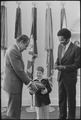
File:Meeting_with_1972_Poster_Child_of_the_National_Association_for_Retarded_Children_-_NARA_-_194760.tif | |||
</gallery> | |||
Latest revision as of 02:11, 17 February 2025
Poster Child
A poster child is a person who is a prominent example or representative of a concept, cause, or the like, often used to garner support and sympathy. The term originated with charities' use of children with disabilities in their fundraising campaigns, with the child's image and story being used on posters and other promotional materials.
Origin[edit]
The term "poster child" originally referred to a child whose picture is used on posters or other media as part of a campaign to raise money or enlist volunteers for a cause or organization. The child may have a disability or illness, and their image and story are used to elicit sympathy and encourage donations or assistance. The term has since expanded to refer to anyone who represents a cause or concept, especially in a public way.
Usage[edit]
In modern usage, a poster child can be an individual who represents a larger group or cause, often used to draw attention to that cause and generate support. This can include individuals who have overcome adversity, achieved significant success, or otherwise embody the values or goals of the cause they represent. The term can also be used pejoratively to refer to someone who is seen as a negative example or warning of a particular issue or problem.
Criticism[edit]
The use of poster children has been criticized for exploiting the individuals involved, particularly when they are children with disabilities or illnesses. Critics argue that this approach can dehumanize the individual and reduce them to a symbol of their condition or cause, rather than recognizing them as a whole person with their own identity and experiences.