Railway surgery: Difference between revisions
CSV import |
CSV import |
||
| Line 35: | Line 35: | ||
{{stub}} | {{stub}} | ||
<gallery> | |||
File:Railway surgery operation.png|Railway surgery operation | |||
File:Collision between two engines, Bay of Quinte Railway, ON, 1892.jpg|Collision between two engines, Bay of Quinte Railway, ON, 1892 | |||
File:Railway surgerys (1899) amputation.png|Railway surgerys (1899) amputation | |||
File:Portrait of John Eric Erichsen FRCS Wellcome L0033899.jpg|Portrait of John Eric Erichsen FRCS | |||
File:Sofie Herzog in her office.jpg|Sofie Herzog in her office | |||
File:Drthomasbond.jpg|Dr. Thomas Bond | |||
File:DRH Front.jpg|DRH Front | |||
File:hospital car, Florida.png|Hospital car, Florida | |||
</gallery> | |||
Latest revision as of 01:45, 20 February 2025
Railway Surgery is a specialized field of medicine that focuses on the treatment and prevention of injuries and illnesses related to railway operations. This includes both acute and chronic conditions that can affect railway workers, passengers, and those living near railway lines.
History[edit]
The concept of Railway Surgery originated in the late 19th century, when railways were rapidly expanding across the United States. At this time, railway companies began to employ surgeons to treat injured workers and passengers. These surgeons were often stationed at major railway hubs, where they could quickly respond to emergencies.
Scope[edit]
Railway Surgery encompasses a wide range of medical disciplines, including emergency medicine, orthopedics, occupational health, and public health. It involves the treatment of both physical injuries, such as fractures and burns, and illnesses, such as respiratory conditions caused by exposure to railway dust.
Role of Railway Surgeons[edit]
Railway Surgeons play a crucial role in maintaining the health and safety of railway workers and passengers. They are responsible for treating injuries and illnesses, conducting health assessments, and implementing preventative measures to reduce the risk of accidents and health problems.
Challenges[edit]
One of the main challenges in Railway Surgery is the remote and often inaccessible locations of railway lines. This can make it difficult for medical personnel to reach injured or ill individuals in a timely manner. Additionally, the nature of railway work can lead to a high incidence of serious injuries, such as those caused by heavy machinery or falls from height.
Future Directions[edit]
With advances in technology and changes in railway operations, the field of Railway Surgery is continually evolving. Future directions may include the use of telemedicine to provide remote consultations and the development of new treatments and preventative measures.
See Also[edit]
 | |
|---|---|
 |
 |
-
 Railway surgery operation
 -
 Collision between two engines, Bay of Quinte Railway, ON, 1892
 -
 Railway surgerys (1899) amputation
 -
 Portrait of John Eric Erichsen FRCS
 -
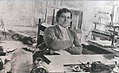 Sofie Herzog in her office
 -
Dr. Thomas Bond
-
DRH Front
-
Hospital car, Florida


_amputation.png)


