Oxygen toxicity: Difference between revisions
CSV import |
CSV import |
||
| Line 27: | Line 27: | ||
{{stub}} | {{stub}} | ||
<gallery> | |||
File:Oxygen_toxicity_testing.jpeg|Oxygen toxicity testing | |||
File:Clark1974.png|Oxygen toxicity | |||
File:Pulmonary_toxicity_tolerance_curves.svg|Pulmonary toxicity tolerance curves | |||
File:Lipid_peroxidation.svg|Lipid peroxidation | |||
File:Cylinder_mod.jpg|Oxygen toxicity | |||
File:Human_eye_cross_section_detached_retina.svg|Human eye cross section with detached retina | |||
File:Human_eye_cross_section_scleral_buckle.svg|Human eye cross section with scleral buckle | |||
File:Incidence_of_ROP.svg|Incidence of ROP | |||
File:Paul_Bert.jpg|Paul Bert | |||
File:Robert_W_Hamilton_Jr.png|Robert W. Hamilton Jr. | |||
</gallery> | |||
Revision as of 11:49, 18 February 2025
Oxygen toxicity is a condition resulting from the harmful effects of breathing molecular oxygen (O2) at elevated partial pressures. It is also known as oxygen toxicity syndrome, oxygen intoxication, and oxygen poisoning. Historically, the central nervous system condition was called the Paul Bert effect, and the pulmonary condition the Lorrain Smith effect, after the researchers who pioneered its discovery and description in the late 19th century. Oxygen toxicity is a concern for underwater diving, space travel, and hyperbaric oxygen therapy.
Signs and symptoms
Oxygen toxicity is characterised by a range of symptoms from mild, such as headaches and shortness of breath, to severe, such as seizures and death. The symptoms are often subtle and can be easily mistaken for other conditions.
Causes
The primary cause of oxygen toxicity is exposure to high partial pressures of oxygen at greater than atmospheric pressure. This can occur in activities such as scuba diving, hyperbaric oxygen therapy, and oxygen supplementation in neonatal care.
Prevention
Prevention of oxygen toxicity involves limiting the exposure to high partial pressures of oxygen. This can be achieved by limiting dive times, using nitrox mixtures with lower oxygen content, and carefully monitoring oxygen exposure in medical settings.
Treatment
Treatment for oxygen toxicity involves reducing the partial pressure of oxygen breathed, treating any seizures that occur, and providing supportive care.
See also
References
<references />
 | |
|---|---|
 |
 |
-
Oxygen toxicity testing
-
 Oxygen toxicity
 -
 Pulmonary toxicity tolerance curves
 -
 Lipid peroxidation
 -
 Oxygen toxicity
 -
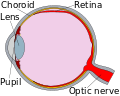 Human eye cross section with detached retina
 -
 Human eye cross section with scleral buckle
 -
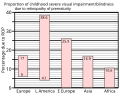 Incidence of ROP
 -
Paul Bert
-
 Robert W. Hamilton Jr.


