Drunk driving: Difference between revisions
CSV import |
CSV import |
||
| Line 26: | Line 26: | ||
[[Category:Law]] | [[Category:Law]] | ||
{{stub}} | {{stub}} | ||
<gallery> | |||
File:Fieldsobrietytest_usa_ct.jpg|Field sobriety test in the USA | |||
File:Bafometro.JPG|Breathalyzer test | |||
File:BAC_driving_risk.svg|Blood Alcohol Concentration driving risk | |||
File:WHO_BAC_Relative_risk.png|WHO BAC Relative risk | |||
File:%_of_US_Car_Crash_Fatalities_Where_Driver_Blood_Alcohol_Level_Was_.01_and_Above_1999_-_2012.gif|Percentage of US car crash fatalities with driver BAC .01 and above (1999-2012) | |||
File:Map_of_European_countries_by_maximum_blood_alcohol_level.svg|Map of European countries by maximum blood alcohol level | |||
File:Ignition_interlock_device_on_Scania_Postbus._Spielvogel.jpg|Ignition interlock device on Scania Postbus | |||
File:AFIS_BILLBOARD_POSTERS._DRINKING_AND_DRIVING._DEFENSE_BILLBOARD-108_-_DPLA_-_911e629f301b63f9fdce0e4eeeef038e.jpeg|Anti-drinking and driving billboard | |||
</gallery> | |||
Latest revision as of 12:05, 18 February 2025
Drunk driving, also known as driving under the influence (DUI), driving while intoxicated (DWI), or impaired driving, is the operation of a motor vehicle while the driver's ability to do so is impaired by alcohol or other substances.
Overview[edit]
Drunk driving is a serious and dangerous behavior that can result in significant legal and financial consequences, as well as injury or death. It is illegal in all jurisdictions within the U.S., although enforcement varies widely between and within states.
Effects of Alcohol on Driving[edit]
Alcohol impairs the ability to operate a vehicle by affecting the driver's motor skills, reaction time, and judgment. The level of impairment depends on several factors, including the amount of alcohol consumed, the rate of consumption, the body weight of the driver, and the driver's tolerance to alcohol.
Legal Consequences[edit]
The legal consequences of drunk driving can be severe and vary by state. They may include fines, jail time, loss of driving privileges, and mandatory alcohol education or treatment programs. In some states, a DUI conviction can result in a felony charge, especially if the driver caused an accident that resulted in injury or death.
Prevention[edit]
Prevention of drunk driving involves a combination of education, enforcement, and policy measures. These may include public awareness campaigns, strict enforcement of DUI laws, and policies such as zero tolerance laws for underage drivers and lower legal blood alcohol concentration (BAC) limits for all drivers.
See Also[edit]
References[edit]
<references />
 | |
|---|---|
 |
 |
-
 Field sobriety test in the USA
 -
 Breathalyzer test
 -
 Blood Alcohol Concentration driving risk
 -
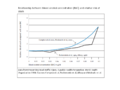 WHO BAC Relative risk
 -
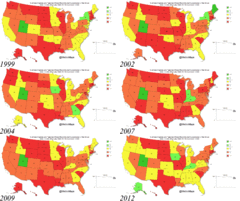 Percentage of US car crash fatalities with driver BAC .01 and above (1999-2012)
 -
 Map of European countries by maximum blood alcohol level
 -
 Ignition interlock device on Scania Postbus
 -
 Anti-drinking and driving billboard


