Beacon Food Forest: Difference between revisions
CSV import |
CSV import |
||
| Line 43: | Line 43: | ||
[[Category:Permaculture]] | [[Category:Permaculture]] | ||
[[Category:Community gardening]] | [[Category:Community gardening]] | ||
== Beacon_Food_Forest == | |||
<gallery> | |||
File:Beacon_Food_Forest_ground-making_(8050522883).jpg|Beacon Food Forest ground making | |||
File:2011-06-07-FF-meeting-124wiki1080.jpg|Beacon Food Forest meeting | |||
File:2011-06-07-FF-meeting-54wiki1080.jpg|Beacon Food Forest meeting | |||
</gallery> | |||
Latest revision as of 21:23, 20 February 2025
Beacon Food Forest[edit]
The Beacon Food Forest is a community-driven urban food forest located in Seattle, Washington. It is a unique project that aims to transform a seven-acre plot of land into a sustainable and edible landscape for the local community.
History[edit]
The idea for the Beacon Food Forest was first conceived in 2009 by a group of local residents who wanted to create a space where people could come together to grow and harvest their own food. The project gained momentum and received support from various organizations and individuals, leading to the establishment of the food forest in 2012.
Design and Features[edit]
The Beacon Food Forest is designed to mimic the structure and functions of a natural forest ecosystem. It consists of different layers, including canopy trees, understory trees, shrubs, herbaceous plants, and groundcover. Each layer serves a specific purpose and contributes to the overall productivity of the food forest.
The food forest is home to a wide variety of edible plants, including fruit trees, berry bushes, and vegetable gardens. These plants are carefully selected to provide a diverse range of food options throughout the year. The design also incorporates features such as rainwater catchment systems, composting areas, and educational signage to promote sustainability and community engagement.
Community Involvement[edit]
The Beacon Food Forest is a collaborative effort that relies on the participation and support of the local community. Volunteers play a crucial role in maintaining and managing the food forest, from planting and harvesting to organizing educational workshops and events.
The food forest also serves as a gathering space for the community, hosting picnics, potlucks, and other social activities. It provides an opportunity for people of all ages and backgrounds to connect with nature, learn about sustainable food production, and foster a sense of belonging.
Impact and Recognition[edit]
Since its establishment, the Beacon Food Forest has become a model for urban agriculture and community-driven initiatives. It has received recognition and support from various organizations, including the City of Seattle and local environmental groups.
The food forest has not only provided a sustainable source of fresh produce for the community but has also contributed to the overall well-being of the neighborhood. It has created a sense of pride and ownership among residents, improved access to healthy food options, and enhanced the ecological resilience of the area.
See Also[edit]
References[edit]
<references />
External Links[edit]
Beacon_Food_Forest[edit]
-
 Beacon Food Forest ground making
 -
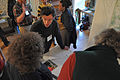 Beacon Food Forest meeting
 -
 Beacon Food Forest meeting
.jpg)


