Barley bread: Difference between revisions
CSV import |
CSV import |
||
| Line 41: | Line 41: | ||
[[Category:Food and drink]] | [[Category:Food and drink]] | ||
[[Category:Cuisine]] | [[Category:Cuisine]] | ||
<gallery> | |||
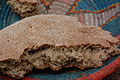
File:Pwin_oidje.JPG|Barley_bread | |||
</gallery> | |||
Latest revision as of 21:35, 20 February 2025
Barley Bread[edit]
Barley bread is a type of bread made primarily from barley flour. It has been consumed by various cultures throughout history and continues to be a popular choice for those seeking a nutritious and hearty alternative to traditional wheat bread.
History[edit]
Barley bread has a long history, dating back to ancient civilizations such as the Egyptians and Greeks. In fact, it was a staple food in ancient Egypt, where it was commonly consumed by both the rich and the poor. The Greeks also valued barley bread for its nutritional benefits and often used it as a main source of sustenance.
Nutritional Benefits[edit]
Barley bread offers several nutritional benefits that make it a healthy choice. It is rich in dietary fiber, which aids in digestion and helps maintain a healthy weight. Additionally, barley bread contains essential vitamins and minerals, including iron, magnesium, and B vitamins.
Preparation[edit]
To make barley bread, barley flour is typically combined with other ingredients such as water, yeast, and salt. The dough is then kneaded and left to rise before being baked in an oven. The resulting bread has a dense texture and a slightly nutty flavor.
Culinary Uses[edit]
Barley bread can be enjoyed in various ways. It can be sliced and used as a base for sandwiches or toast. It can also be served alongside soups, stews, or salads, adding a hearty and nutritious element to the meal.
Health Benefits[edit]
Consuming barley bread can have several health benefits. Its high fiber content helps regulate blood sugar levels and promotes a healthy digestive system. Additionally, the vitamins and minerals found in barley bread contribute to overall well-being and can support a strong immune system.
Cultural Significance[edit]
Barley bread holds cultural significance in many regions around the world. In some cultures, it is considered a symbol of abundance and prosperity. It is also often associated with traditional celebrations and religious ceremonies.
See Also[edit]
References[edit]
<references />
-
 Barley_bread

