Plant: Difference between revisions
No edit summary |
CSV import |
||
| Line 21: | Line 21: | ||
*[[Seed]] | *[[Seed]] | ||
[[Category:Plants]] [[Category:Botany]] [[Category:Photosynthesis]] [[Category:Ecology]] | [[Category:Plants]] [[Category:Botany]] [[Category:Photosynthesis]] [[Category:Ecology]] | ||
<gallery> | |||
File:Frühling blühender Kirschenbaum.jpg|Plant | |||
File:Micrasterias radiata.jpg|Plant | |||
File:Climacium dendroides — Flora Batava — Volume v9 (cropped).jpg|Plant | |||
File:Glaucocystis nostochinearum.jpg|Plant | |||
File:Pinus sylvestris - Köhler–s Medizinal-Pflanzen-106 (extracted).jpg|Plant | |||
File:Chondrus crispus - Köhler–s Medizinal-Pflanzen-034 (single) (cropped).jpg|Plant | |||
File:Dryopteris filix-mas - Köhler–s Medizinal-Pflanzen-202.jpg|Plant | |||
File:Lycopodium clavatum - Köhler–s Medizinal-Pflanzen-219 (extracted).jpg|Plant | |||
File:Cosmarium201512081550.JPG|Plant | |||
File:US 199 Redwood Highway.jpg|Plant | |||
File:Rhynia stem.jpg|Plant | |||
File:Devonianscene-green.jpg|Plant | |||
</gallery> | |||
Latest revision as of 01:06, 20 February 2025
A plant is a living thing that grow from the Earth. Most plants derive their energy from the Sun using a process called photosynthesis. Plants are characterized by their ability to produce their own food through the process of photosynthesis, which involves using sunlight, water, and carbon dioxide to produce organic compounds like glucose. They play a vital role in the ecosystem by producing oxygen and serving as the base of many food chains.
Anatomy[edit]
Plants have a complex anatomy that allows them to carry out photosynthesis and other essential functions. They typically have three main parts: roots, stems, and leaves. The roots anchor the plant in the soil and absorb water and nutrients from the ground. The stems provide support for the plant and transport water and nutrients from the roots to the leaves. The leaves are the primary site of photosynthesis and contain specialized structures called chloroplasts that are responsible for capturing sunlight. Plants also have specialized tissues that carry out specific functions. The xylem transports water and minerals from the roots to the rest of the plant, while the phloem transports organic compounds like glucose from the leaves to other parts of the plant.
Reproduction[edit]
Plants can reproduce sexually or asexually. Sexual reproduction involves the fusion of male and female gametes to form a zygote, which develops into a new plant. This process can occur within the same plant or between different plants. Asexual reproduction involves the production of offspring without the need for gamete fusion. This can occur through various mechanisms such as vegetative propagation, where a new plant grows from a fragment of the parent plant, or by producing specialized structures like bulbs or runners.
Diversity[edit]
There are over 300,000 species of plants, ranging from tiny mosses and ferns to towering trees. Plants are classified into various groups based on their characteristics such as the presence or absence of specialized tissues or the type of reproductive structures they produce. Some common groups of plants include angiosperms (flowering plants), gymnosperms (non-flowering seed plants), mosses, ferns, and algae. Each group has its own unique characteristics and plays a vital role in the ecosystem.
Importance[edit]
Plants are essential to life on Earth. They are the primary producers in most ecosystems, producing organic compounds that serve as food for other organisms. They also play a critical role in regulating the Earth's climate by absorbing carbon dioxide from the atmosphere and producing oxygen through photosynthesis. Plants have numerous other benefits as well. They are used in medicine to treat various ailments, and many plant compounds have been found to have anticancer and anti-inflammatory properties. Plants are also used in industry to produce a wide range of products such as lumber, paper, and textiles.
Threats[edit]
Plants face numerous threats, including habitat loss, pollution, climate change, and invasive species. Many plant species are endangered or threatened due to human activities like deforestation and urbanization. The loss of plant species can have cascading effects on the ecosystem, leading to declines in other species and a loss of ecosystem services.
References[edit]
See also[edit]
-
 Plant
Plant -
 Plant
Plant -
 Plant
Plant -
 Plant
Plant -
 Plant
Plant -
 Plant
Plant -
 Plant
Plant -
 Plant
Plant -
 Plant
Plant -
 Plant
Plant -
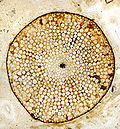 Plant
Plant -
 Plant
Plant


.jpg)

.jpg)
_(cropped).jpg)

.jpg)


