Anti-vaccine activism: Difference between revisions
CSV import |
CSV import |
||
| Line 4: | Line 4: | ||
File:London_Society_for_the_Abolition_of_Compulsory_1880s.png|London Society for the Abolition of Compulsory Vaccination, 1880s | File:London_Society_for_the_Abolition_of_Compulsory_1880s.png|London Society for the Abolition of Compulsory Vaccination, 1880s | ||
</gallery> | </gallery> | ||
== Anti-vaccine activism == | |||
Anti-vaccine activism refers to the opposition to vaccination, which is the administration of vaccines to stimulate an individual's immune system to develop adaptive immunity to a pathogen. This activism can manifest in various forms, including public campaigns, dissemination of misinformation, and lobbying against vaccine mandates. | |||
=== History === | |||
The roots of anti-vaccine activism can be traced back to the 19th century, shortly after the introduction of the [[smallpox vaccine]]. The [[Anti-Vaccination League]] was formed in response to the [[Vaccination Act of 1853]] in the United Kingdom, which mandated smallpox vaccination for infants. Opposition was based on the grounds of personal liberty, religious beliefs, and skepticism about the safety and efficacy of vaccines. | |||
In the 20th century, anti-vaccine sentiments were fueled by various incidents, such as the Cutter Incident in 1955, where a batch of [[polio vaccine]] was improperly inactivated, leading to cases of polio. The modern anti-vaccine movement gained significant momentum in the late 1990s and early 2000s, largely due to a now-discredited study by [[Andrew Wakefield]] that falsely linked the [[MMR vaccine]] to [[autism]]. | |||
=== Arguments and Beliefs === | |||
Anti-vaccine activists often argue that vaccines are unsafe and can cause serious side effects, including [[autism]], [[autoimmune diseases]], and other chronic conditions. They may also claim that natural immunity is superior to vaccine-acquired immunity and that vaccines contain harmful substances such as [[thimerosal]] or [[aluminum]]. | |||
Some activists oppose vaccines on the grounds of personal freedom and bodily autonomy, arguing against government mandates and perceived overreach. Others may have religious or philosophical objections to vaccination. | |||
=== Impact === | |||
Anti-vaccine activism has led to decreased vaccination rates in certain communities, resulting in outbreaks of vaccine-preventable diseases such as [[measles]], [[mumps]], and [[whooping cough]]. These outbreaks pose significant public health risks, particularly to individuals who cannot be vaccinated due to medical reasons and rely on [[herd immunity]] for protection. | |||
The spread of misinformation through social media platforms has amplified the reach of anti-vaccine messages, making it challenging for public health officials to counteract false claims and promote accurate information about vaccine safety and efficacy. | |||
=== Countermeasures === | |||
Public health organizations and governments have implemented various strategies to combat anti-vaccine activism. These include educational campaigns to inform the public about the benefits and safety of vaccines, legislation to enforce vaccine mandates, and efforts to improve vaccine accessibility. | |||
Healthcare professionals play a crucial role in addressing vaccine hesitancy by engaging in open and empathetic conversations with patients and providing evidence-based information. | |||
== Related pages == | |||
* [[Vaccination]] | |||
* [[Herd immunity]] | |||
* [[Vaccine hesitancy]] | |||
* [[Andrew Wakefield]] | |||
* [[MMR vaccine]] | |||
{{Vaccination}} | |||
[[Category:Vaccination]] | |||
[[Category:Public health]] | |||
[[Category:Medical controversies]] | |||
Latest revision as of 00:37, 19 February 2025
-
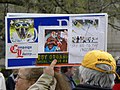 Anti-vaccination conspiracy theorist at a Tea Party Express rally
 -
 Rally of the Anti-Vaccination League of Canada
 -
 London Society for the Abolition of Compulsory Vaccination, 1880s
.jpg)


Anti-vaccine activism[edit]
Anti-vaccine activism refers to the opposition to vaccination, which is the administration of vaccines to stimulate an individual's immune system to develop adaptive immunity to a pathogen. This activism can manifest in various forms, including public campaigns, dissemination of misinformation, and lobbying against vaccine mandates.
History[edit]
The roots of anti-vaccine activism can be traced back to the 19th century, shortly after the introduction of the smallpox vaccine. The Anti-Vaccination League was formed in response to the Vaccination Act of 1853 in the United Kingdom, which mandated smallpox vaccination for infants. Opposition was based on the grounds of personal liberty, religious beliefs, and skepticism about the safety and efficacy of vaccines.
In the 20th century, anti-vaccine sentiments were fueled by various incidents, such as the Cutter Incident in 1955, where a batch of polio vaccine was improperly inactivated, leading to cases of polio. The modern anti-vaccine movement gained significant momentum in the late 1990s and early 2000s, largely due to a now-discredited study by Andrew Wakefield that falsely linked the MMR vaccine to autism.
Arguments and Beliefs[edit]
Anti-vaccine activists often argue that vaccines are unsafe and can cause serious side effects, including autism, autoimmune diseases, and other chronic conditions. They may also claim that natural immunity is superior to vaccine-acquired immunity and that vaccines contain harmful substances such as thimerosal or aluminum.
Some activists oppose vaccines on the grounds of personal freedom and bodily autonomy, arguing against government mandates and perceived overreach. Others may have religious or philosophical objections to vaccination.
Impact[edit]
Anti-vaccine activism has led to decreased vaccination rates in certain communities, resulting in outbreaks of vaccine-preventable diseases such as measles, mumps, and whooping cough. These outbreaks pose significant public health risks, particularly to individuals who cannot be vaccinated due to medical reasons and rely on herd immunity for protection.
The spread of misinformation through social media platforms has amplified the reach of anti-vaccine messages, making it challenging for public health officials to counteract false claims and promote accurate information about vaccine safety and efficacy.
Countermeasures[edit]
Public health organizations and governments have implemented various strategies to combat anti-vaccine activism. These include educational campaigns to inform the public about the benefits and safety of vaccines, legislation to enforce vaccine mandates, and efforts to improve vaccine accessibility.
Healthcare professionals play a crucial role in addressing vaccine hesitancy by engaging in open and empathetic conversations with patients and providing evidence-based information.
Related pages[edit]
| Vaccination |
|---|
|
|
