Oxacephem: Difference between revisions
CSV import |
CSV import |
||
| (One intermediate revision by the same user not shown) | |||
| Line 1: | Line 1: | ||
{{Short description|A class of beta-lactam antibiotics}} | |||
{{Use dmy dates|date=October 2023}} | |||
'''Oxacephems''' are a class of [[beta-lactam antibiotics]] that are structurally related to the [[cephalosporins]]. They are characterized by the presence of an oxygen atom in place of the sulfur atom found in the cephalosporin core structure. This modification imparts unique properties to oxacephems, influencing their antibacterial activity and pharmacokinetic profiles. | |||
== | ==Structure and Mechanism of Action== | ||
Oxacephems, like other beta-lactam antibiotics, exert their antibacterial effects by inhibiting bacterial [[cell wall]] synthesis. They achieve this by binding to and inactivating [[penicillin-binding proteins]] (PBPs), which are essential for the cross-linking of the [[peptidoglycan]] layer of bacterial cell walls. The disruption of cell wall synthesis leads to cell lysis and death, particularly in actively dividing bacteria. | |||
The unique feature of oxacephems is the replacement of the sulfur atom in the cephalosporin nucleus with an oxygen atom. This structural change can affect the spectrum of activity and resistance to beta-lactamases, enzymes produced by some bacteria that confer resistance to beta-lactam antibiotics. | |||
== | ==Clinical Uses== | ||
Oxacephems are used to treat a variety of bacterial infections, particularly those caused by Gram-positive and some Gram-negative bacteria. They are often reserved for infections where other beta-lactams may not be effective due to resistance or patient allergies. | |||
== | ===Common Indications=== | ||
* [[ | * [[Respiratory tract infections]] | ||
* [[Urinary tract infections]] | |||
* [[Skin and soft tissue infections]] | |||
* [[Intra-abdominal infections]] | |||
==Pharmacokinetics== | |||
The pharmacokinetic properties of oxacephems can vary depending on the specific agent within this class. Generally, they are well absorbed after oral administration, although some may require parenteral administration for optimal efficacy. Oxacephems are distributed widely in body tissues and fluids, and they are primarily excreted unchanged in the urine. | |||
==Side Effects== | |||
As with other beta-lactam antibiotics, oxacephems can cause a range of side effects. Common adverse effects include: | |||
* [[Allergic reactions]], ranging from mild rashes to severe [[anaphylaxis]] | |||
* [[Gastrointestinal disturbances]], such as [[nausea]], [[vomiting]], and [[diarrhea]] | |||
* [[Hematological effects]], including [[neutropenia]] and [[thrombocytopenia]] | |||
==Resistance== | |||
Bacterial resistance to oxacephems, as with other beta-lactams, can occur through several mechanisms: | |||
* Production of beta-lactamases that hydrolyze the beta-lactam ring | |||
* Alteration of PBPs, reducing the binding affinity of the antibiotic | |||
* Efflux pumps that expel the antibiotic from the bacterial cell | |||
==Related Pages== | |||
* [[Beta-lactam antibiotics]] | |||
* [[Cephalosporins]] | |||
* [[Penicillin-binding proteins]] | |||
* [[Antibiotic resistance]] | * [[Antibiotic resistance]] | ||
[[Category:Beta-lactam antibiotics]] | |||
[[Category:Antibiotics]] | [[Category:Antibiotics]] | ||
<gallery caption="Oxacephem"> | |||
File:Latamoxef.svg|Latamoxef | |||
File:Flomoxef.png|Flomoxef | |||
File: | |||
File:Flomoxef.png| | |||
</gallery> | </gallery> | ||
Latest revision as of 01:24, 20 February 2025
A class of beta-lactam antibiotics
Oxacephems are a class of beta-lactam antibiotics that are structurally related to the cephalosporins. They are characterized by the presence of an oxygen atom in place of the sulfur atom found in the cephalosporin core structure. This modification imparts unique properties to oxacephems, influencing their antibacterial activity and pharmacokinetic profiles.
Structure and Mechanism of Action[edit]
Oxacephems, like other beta-lactam antibiotics, exert their antibacterial effects by inhibiting bacterial cell wall synthesis. They achieve this by binding to and inactivating penicillin-binding proteins (PBPs), which are essential for the cross-linking of the peptidoglycan layer of bacterial cell walls. The disruption of cell wall synthesis leads to cell lysis and death, particularly in actively dividing bacteria.
The unique feature of oxacephems is the replacement of the sulfur atom in the cephalosporin nucleus with an oxygen atom. This structural change can affect the spectrum of activity and resistance to beta-lactamases, enzymes produced by some bacteria that confer resistance to beta-lactam antibiotics.
Clinical Uses[edit]
Oxacephems are used to treat a variety of bacterial infections, particularly those caused by Gram-positive and some Gram-negative bacteria. They are often reserved for infections where other beta-lactams may not be effective due to resistance or patient allergies.
Common Indications[edit]
- Respiratory tract infections
- Urinary tract infections
- Skin and soft tissue infections
- Intra-abdominal infections
Pharmacokinetics[edit]
The pharmacokinetic properties of oxacephems can vary depending on the specific agent within this class. Generally, they are well absorbed after oral administration, although some may require parenteral administration for optimal efficacy. Oxacephems are distributed widely in body tissues and fluids, and they are primarily excreted unchanged in the urine.
Side Effects[edit]
As with other beta-lactam antibiotics, oxacephems can cause a range of side effects. Common adverse effects include:
- Allergic reactions, ranging from mild rashes to severe anaphylaxis
- Gastrointestinal disturbances, such as nausea, vomiting, and diarrhea
- Hematological effects, including neutropenia and thrombocytopenia
Resistance[edit]
Bacterial resistance to oxacephems, as with other beta-lactams, can occur through several mechanisms:
- Production of beta-lactamases that hydrolyze the beta-lactam ring
- Alteration of PBPs, reducing the binding affinity of the antibiotic
- Efflux pumps that expel the antibiotic from the bacterial cell
Related Pages[edit]
- Oxacephem
-
 Latamoxef
 -
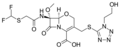 Flomoxef


