Alexander Monro Secundus: Difference between revisions
CSV import |
CSV import |
||
| Line 41: | Line 41: | ||
[[Category:Alumni of the University of Edinburgh]] | [[Category:Alumni of the University of Edinburgh]] | ||
[[Category:Academics of the University of Edinburgh]] | [[Category:Academics of the University of Edinburgh]] | ||
<gallery> | |||
File:Alexander_Munro_secundus.jpg|Portrait of Alexander Monro Secundus | |||
File:The_grave_of_Alexander_Monro,_Greyfriars_Kirkyard.jpg|The grave of Alexander Monro in Greyfriars Kirkyard | |||
</gallery> | |||
Latest revision as of 01:40, 18 February 2025
Alexander Monro Secundus[edit]

Alexander Monro Secundus (20 May 1733 – 2 October 1817) was a prominent Scottish anatomist and physician, known for his contributions to the field of anatomy and his role in the University of Edinburgh Medical School. He was the second of three generations of the Monro family to hold the chair of anatomy at the University of Edinburgh, a position that greatly influenced the development of medical education in the 18th and early 19th centuries.
Early Life and Education[edit]
Alexander Monro Secundus was born in Edinburgh, Scotland, into the renowned Monro family. His father, Alexander Monro Primus, was the first professor of anatomy at the University of Edinburgh, and his son, Alexander Monro Tertius, would later succeed him in this role. Monro Secundus was educated at the University of Edinburgh, where he studied under his father and other notable physicians of the time.
Career[edit]
Monro Secundus succeeded his father as the professor of anatomy at the University of Edinburgh in 1755. His tenure was marked by significant advancements in the teaching of anatomy and the expansion of the medical school. He was known for his detailed lectures and dissections, which attracted students from across Europe.
Monro Secundus made several important contributions to medical science, including his work on the lymphatic system and the nervous system. He published numerous papers and books, which were widely read and respected in the medical community.
Contributions to Anatomy[edit]
Monro Secundus is perhaps best known for his work on the Monro-Kellie doctrine, which describes the relationship between the intracranial pressure, cerebrospinal fluid, and the brain. This doctrine remains a fundamental concept in neurosurgery and neurology.
He also conducted extensive research on the human skeleton, muscles, and organs, providing detailed descriptions and illustrations that were used in medical education for many years.
Legacy[edit]
Monro Secundus's influence extended beyond his own lifetime, as he helped establish the University of Edinburgh as a leading center for medical education. His teachings and publications laid the groundwork for future generations of anatomists and physicians.
He was buried in Greyfriars Kirkyard in Edinburgh, where his grave can still be visited today.

Related Pages[edit]
- Alexander Monro Primus
- Alexander Monro Tertius
- University of Edinburgh Medical School
- Monro-Kellie doctrine
-
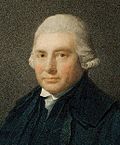 Portrait of Alexander Monro Secundus
 -
 The grave of Alexander Monro in Greyfriars Kirkyard
