European Economic Community: Difference between revisions
CSV import Tags: mobile edit mobile web edit |
CSV import |
||
| Line 34: | Line 34: | ||
[[Category:History of the European Union]] | [[Category:History of the European Union]] | ||
{{Europe-stub}} | {{Europe-stub}} | ||
<gallery> | |||
File:De Gaulle-OWI.jpg|De Gaulle OWI | |||
File:Enlargement of the European Union 77.gif|Enlargement of the European Union 77 | |||
File:Expansion of the European Communities 1973-1992.png|Expansion of the European Communities 1973-1992 | |||
File:Cifrão symbol.svg|Cifrão symbol | |||
File:Luxembourg0080.JPG|Luxembourg | |||
File:Bundesarchiv B 145 Bild-F078267-0023, Bonn, Ministerpräsidenten mit EU-Kommissar Delors-CROPPED.jpg|Bonn Ministerpräsidenten mit EU-Kommissar Delors | |||
File:Bundesarchiv B 145 Bild-F023908-0002, Straßburg, Tagung des Europarates.jpg|Straßburg Tagung des Europarates | |||
</gallery> | |||
Latest revision as of 17:48, 3 March 2025
File:Anthem of Europe (US Navy instrumental short version).ogg European Economic Community (EEC) was an international organization created with the aim of bringing about economic integration among its member states. It was established by the Treaty of Rome in 1957 by six countries: Belgium, Germany, France, Italy, Luxembourg, and the Netherlands. The EEC is considered a major step in the process of European integration. Over time, it expanded to include more member states and evolved into what is known today as the European Union (EU).
History[edit]
The foundation of the EEC was motivated by the desire for economic cooperation and peace among European countries after the devastation of World War II. The idea was to create a single market for goods, services, labor, and capital across member states, eliminating trade barriers and fostering economic growth. The EEC aimed to establish common policies on various economic matters, including agriculture, transport, and competition.
In 1967, the EEC merged with two other organizations, the European Coal and Steel Community (ECSC) and the European Atomic Energy Community (Euratom), to form the European Communities (EC). This merger was a significant step towards closer economic and political union among the member states.
The Single European Act of 1986 introduced reforms to streamline decision-making and expand the EEC's powers, setting the stage for the completion of the single market. The Maastricht Treaty, signed in 1992, transformed the EEC into the European Union, marking a new phase in European integration with the introduction of a single currency, the Euro, and the development of common policies in areas beyond the economy, such as foreign and security policy.
Objectives[edit]
The primary objectives of the EEC were to:
- Promote economic and social progress among member states through common action and the elimination of barriers to trade.
- Establish a customs union with a common external tariff against non-member countries.
- Ensure the harmonious development of economic activities across the region.
- Reduce disparities between different regions of the community.
- Establish a common agricultural policy (CAP) to support farmers and ensure food security.
Institutions[edit]
The EEC was governed by several key institutions:
- The European Commission was responsible for proposing legislation and ensuring its implementation.
- The Council of the European Union (often simply called the Council) represented the governments of the member states and was the EEC's main decision-making body.
- The European Parliament was initially a consultative body but gained legislative powers over time.
- The European Court of Justice ensured that the law was observed in the interpretation and application of the Treaties.
Expansion and Legacy[edit]
The EEC began with six founding members but expanded to include a total of 12 countries by the time it was transformed into the EU. The success of the EEC in achieving economic integration among its member states is seen as a significant factor in the peace and stability that Europe has enjoyed in the post-war period. The transition from the EEC to the EU represented a shift towards a broader and deeper union, encompassing not just economic but also political, social, and environmental cooperation.
See Also[edit]

-
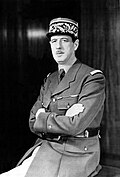 De Gaulle OWI
 -
 Enlargement of the European Union 77
 -
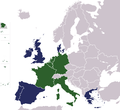 Expansion of the European Communities 1973-1992
 -
 Cifrão symbol
 -
 Luxembourg
 -
 Bonn Ministerpräsidenten mit EU-Kommissar Delors
 -
 Straßburg Tagung des Europarates


