Harare: Difference between revisions
CSV import Tags: mobile edit mobile web edit |
CSV import |
||
| Line 28: | Line 28: | ||
[[Category:Harare]] | [[Category:Harare]] | ||
[[Category:Cities in Zimbabwe]] | [[Category:Cities in Zimbabwe]] | ||
<gallery> | |||
File:Harare Skyline.jpg|Harare Skyline | |||
File:Jacaranda trees in Montagu Ave, Harare, Zimbabwe in 1975.jpg|Jacaranda Trees in Montagu Ave, Harare | |||
File:Harare parlament 24032005.jpg|Harare Parliament | |||
File:Harare.jpg|Harare | |||
File:Reserve Bank of Zimbabwe N.png|Reserve Bank of Zimbabwe | |||
File:Heroes Acre Monument, Harare, Zimbabwe.jpg|Heroes Acre Monument, Harare | |||
</gallery> | |||
Latest revision as of 01:25, 20 February 2025


Harare is the capital city and most populous city of Zimbabwe, a country located in Southern Africa. Founded in 1890 as Salisbury, it was renamed Harare in 1982, a name derived from the Shona chieftain Neharawa. Harare is a major cultural, economic, and educational center of the country, serving as a hub for both the commercial and governmental activities in Zimbabwe.
History[edit]
The area that is now Harare has been the site of human habitation for thousands of years, with evidence of a pre-colonial civilization at nearby Great Zimbabwe, a city that flourished in the 11th to 15th centuries. The modern city was founded by the British South Africa Company in 1890 and named Salisbury after the 3rd Marquess of Salisbury, then British Prime Minister. It served as the capital of Southern Rhodesia (now Zimbabwe) from 1923, and during the Rhodesian era, it was a center for the country's resistance against British rule. Following Zimbabwe's independence in 1980, the city was renamed Harare on April 18, 1982.
Geography[edit]
Harare is situated in the northeastern part of Zimbabwe, in the heart of the Mashonaland plateau. Its elevation at 1,483 meters (4,865 feet) above sea level gives it a moderate climate. The city is surrounded by landscaped parks and the agricultural countryside of the Mashonaland region, making it a pivotal point for the distribution of agricultural produce.
Economy[edit]
Harare is the economic center of Zimbabwe, hosting the country's main financial, commercial, and communications establishments. The city's economy is diverse, with sectors including manufacturing, trade, and services. It is also home to the Zimbabwe Stock Exchange (ZSE), the largest in the country, and several major companies and banks. Despite the economic challenges faced by Zimbabwe, Harare remains a vital economic hub.
Culture and Society[edit]
Harare is known for its vibrant cultural scene, with numerous festivals, art galleries, and music venues. The National Gallery of Zimbabwe, located in Harare, showcases a wide range of African art, including both contemporary and historical pieces. The city is also home to the Harare International Festival of the Arts (HIFA), one of the largest cultural events in Africa.
Education[edit]
The city boasts several institutions of higher learning, including the University of Zimbabwe, the oldest and largest university in the country. Harare also hosts numerous primary and secondary schools, both public and private, offering education to the city's youth.
Infrastructure[edit]
Harare's infrastructure includes modern amenities and services, with a network of roads, railways, and an international airport, Harare International Airport, connecting it to other major cities around the world. However, the city faces challenges such as water shortages and power outages, reflecting broader infrastructural issues in Zimbabwe.
Challenges[edit]
Harare, like many other cities in Zimbabwe, faces a range of social and economic challenges, including unemployment, poverty, and a high cost of living. The city's infrastructure, while relatively developed, requires significant investment to upgrade and expand services to meet the needs of its growing population.
Conclusion[edit]
Harare remains a city of contrasts, where vibrant cultural expressions and economic activities coexist with socio-economic challenges. As the capital of Zimbabwe, it plays a crucial role in the nation's politics, economy, and culture, embodying the resilience and spirit of its people.
-
 Harare Skyline
 -
 Jacaranda Trees in Montagu Ave, Harare
 -
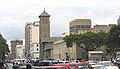 Harare Parliament
 -
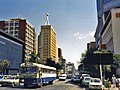 Harare
 -
 Reserve Bank of Zimbabwe
 -
 Heroes Acre Monument, Harare


