God the Father: Difference between revisions
CSV import |
No edit summary |
||
| (2 intermediate revisions by the same user not shown) | |||
| Line 1: | Line 1: | ||
[[File: | |||
{{Christianity}} | |||
[[File:Michelangelo,_Creation_of_Adam_04.jpg|Creation of Adam|thumb]] | |||
[[File:Jacob_Herreyns_I_-_God_the_Father.jpg|God the Father|thumb|left]] | |||
[[File:Schnorr_von_Carolsfeld_Bibel_in_Bildern_1860_001.png|Bibel in Bildern 1860|thumb]] | |||
[[File:Cima_da_Conegliano,_God_the_Father.jpg|God the Father|thumb]] | |||
'''God the Father''' is a central figure in [[Christianity]], representing the first person of the [[Trinity]], which also includes [[Jesus Christ]] (the Son) and the [[Holy Spirit]]. The concept of God the Father highlights the belief in a supreme, eternal being who created and governs the universe. This article explores the theological and doctrinal aspects of God the Father within Christian beliefs. | |||
==Theology== | ==Theology== | ||
God the Father is understood as the ultimate source of all being and life, the creator of the universe, and the primary authority in the divine relationship known as the Trinity. The Father is omnipotent, omniscient, and omnipresent, possessing an infinite capacity for love, justice, and mercy. In Christian theology, the Father's role is often associated with divine providence, the act of sustaining and guiding human beings and the universe. | |||
The concept of God as a | ==Biblical References== | ||
The concept of God as a father is evident throughout the [[Bible]], particularly in the [[New Testament]]. Jesus often referred to God as "Father," emphasizing a close, intimate relationship. Notable passages include the Lord's Prayer (Matthew 6:9-13), where Jesus teaches his disciples to address God as "Our Father who art in heaven." This signifies not only authority but also a paternal relationship that is nurturing and protective. | |||
==Historical Development== | ==Historical Development== | ||
The | The understanding of God the Father has evolved over the centuries. Early Christian thought, influenced by [[Judaism]], emphasized a strict monotheism. Throughout the history of [[Christian theology]], various church fathers and theologians like [[Augustine of Hippo]] and [[Thomas Aquinas]] have contributed to the development of the doctrine of the Trinity, clarifying the distinct yet unified nature of God the Father in relation to the Son and the Holy Spirit. | ||
==Creeds and Confessions== | |||
The doctrine of God the Father is affirmed in several historic Christian creeds, which serve to define and consolidate the core beliefs of Christianity. The [[Nicene Creed]], formulated in the 4th century, is particularly significant. It begins with, "We believe in one God, the Father Almighty, Maker of heaven and earth, and of all things visible and invisible," underscoring the Father's role as creator and sustainer. | |||
== | ==Cultural and Religious Impact== | ||
The portrayal of God as a father has had a profound impact on cultural and religious perceptions. This imagery has influenced Christian art, literature, and liturgy, where God the Father is often depicted as an elderly, wise figure. However, the paternal image has also been subject to critique and reinterpretation, particularly in modern theology and feminist theology, which seek to address perceived patriarchal implications. | |||
==Contemporary Issues== | ==Contemporary Issues== | ||
In contemporary theology, the image of God the Father continues to be a topic of discussion and debate. Issues include the language used to describe God, the relationship between the traditional paternal image and modern understandings of fatherhood, and the implications of this imagery for gender and authority in religious and social contexts. | |||
== Gallery == | |||
<gallery> | |||
File:Vision_of_Ezekiel.jpg|Vision of Ezekiel | |||
File:Shield-Trinity-Scutum-Fidei-English.svg|Shield of the Trinity | |||
File:Joseph_Smith_first_vision_stained_glass.jpg|Joseph Smith First Vision | |||
File:GodInvitingChristDetail.jpg|God Inviting Christ | |||
</gallery> | |||
[[Category: | ==See Also== | ||
[[Category: | * [[Trinity]] | ||
{{ | * [[Christianity]] | ||
* [[Jesus Christ]] | |||
* [[Holy Spirit]] | |||
* [[Nicene Creed]] | |||
[[Category:Christian theology]] | |||
[[Category:God in Christianity]] | |||
{{Christian-stub}} | |||
Latest revision as of 20:44, 27 February 2025
| Part of a series on |
| Christianity |
|---|
 |

God the Father is a central figure in Christianity, representing the first person of the Trinity, which also includes Jesus Christ (the Son) and the Holy Spirit. The concept of God the Father highlights the belief in a supreme, eternal being who created and governs the universe. This article explores the theological and doctrinal aspects of God the Father within Christian beliefs.
Theology[edit]
God the Father is understood as the ultimate source of all being and life, the creator of the universe, and the primary authority in the divine relationship known as the Trinity. The Father is omnipotent, omniscient, and omnipresent, possessing an infinite capacity for love, justice, and mercy. In Christian theology, the Father's role is often associated with divine providence, the act of sustaining and guiding human beings and the universe.
Biblical References[edit]
The concept of God as a father is evident throughout the Bible, particularly in the New Testament. Jesus often referred to God as "Father," emphasizing a close, intimate relationship. Notable passages include the Lord's Prayer (Matthew 6:9-13), where Jesus teaches his disciples to address God as "Our Father who art in heaven." This signifies not only authority but also a paternal relationship that is nurturing and protective.
Historical Development[edit]
The understanding of God the Father has evolved over the centuries. Early Christian thought, influenced by Judaism, emphasized a strict monotheism. Throughout the history of Christian theology, various church fathers and theologians like Augustine of Hippo and Thomas Aquinas have contributed to the development of the doctrine of the Trinity, clarifying the distinct yet unified nature of God the Father in relation to the Son and the Holy Spirit.
Creeds and Confessions[edit]
The doctrine of God the Father is affirmed in several historic Christian creeds, which serve to define and consolidate the core beliefs of Christianity. The Nicene Creed, formulated in the 4th century, is particularly significant. It begins with, "We believe in one God, the Father Almighty, Maker of heaven and earth, and of all things visible and invisible," underscoring the Father's role as creator and sustainer.
Cultural and Religious Impact[edit]
The portrayal of God as a father has had a profound impact on cultural and religious perceptions. This imagery has influenced Christian art, literature, and liturgy, where God the Father is often depicted as an elderly, wise figure. However, the paternal image has also been subject to critique and reinterpretation, particularly in modern theology and feminist theology, which seek to address perceived patriarchal implications.
Contemporary Issues[edit]
In contemporary theology, the image of God the Father continues to be a topic of discussion and debate. Issues include the language used to describe God, the relationship between the traditional paternal image and modern understandings of fatherhood, and the implications of this imagery for gender and authority in religious and social contexts.
Gallery[edit]
-
 Vision of Ezekiel
 -
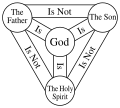 Shield of the Trinity
 -
Joseph Smith First Vision
-
God Inviting Christ


