Ghost pepper: Difference between revisions
CSV import Tags: mobile edit mobile web edit |
CSV import |
||
| Line 29: | Line 29: | ||
{{food-stub}} | {{food-stub}} | ||
<gallery> | |||
File:Bhut-Jolokia-pc.jpg|Ghost pepper | |||
File:Bhoot_Jolokia_(_Ghost_Chili_pepper_).jpg|Ghost pepper | |||
File:Bhut_jolokia_10_Days.JPG|Ghost pepper | |||
File:Bhut_jolokia_leaf.JPG|Ghost pepper | |||
File:Bhut_jolokia_plant_40_days.JPG|Ghost pepper | |||
File:Peach_Bhut_Jolokia_Ghost_Pepper.jpg|Ghost pepper | |||
File:Yellow_Bhut_Jolokia_Ghost_Pepper.jpg|Ghost pepper | |||
File:Chocolate_Bhut_Jolokia_Ghost_Pepper.jpg|Ghost pepper | |||
File:Purple_Bhut_Jolokia_Ghost_Pepper.jpg|Ghost pepper | |||
File:Red_Bhut_Jolokia_Ghost_PepperParadise.org.JPG|Ghost pepper | |||
File:Bjhut-Jolokia.jpg|Ghost pepper | |||
File:Bhut-Jolokia-plant.jpg|Ghost pepper | |||
</gallery> | |||
Latest revision as of 12:22, 18 February 2025
Bhut Jolokia, also known as the Ghost Pepper, is one of the hottest chili peppers in the world. It is a hybrid chili pepper cultivated in the Northeast India regions, particularly in the states of Assam, Nagaland, and Manipur. The name "Bhut Jolokia" translates to "ghost pepper" in Assamese, owing to its extreme heat and the 'ghostly' effect it has on those who eat it.
Origin and History[edit]
The Ghost Pepper is believed to have originated in the Northeastern regions of India, where it has been used for centuries both as a food ingredient and a traditional medicine. It gained international attention in the early 21st century when it was identified as one of the hottest peppers in the world by the Guinness World Records. This recognition sparked global interest, leading to its cultivation in various parts of the world.
Description[edit]
The Bhut Jolokia is characterized by its unique shape, vibrant colors ranging from green to red or orange as it matures, and its wrinkled texture. The pepper measures approximately 2.5 to 3.5 inches in length. Its heat level is measured in Scoville Heat Units (SHU), with the Ghost Pepper averaging over 1,000,000 SHU, making it significantly hotter than traditional chili peppers such as the Jalapeño.
Cultivation[edit]
Cultivation of the Ghost Pepper requires warm, humid conditions, similar to those found in its native Northeast India. The plants are typically grown in well-drained soil and require a significant amount of sunlight and water to thrive. Harvesting occurs when the peppers turn from green to their mature color, indicating peak heat and flavor.
Culinary Uses[edit]
In Indian cuisine, the Bhut Jolokia is used sparingly due to its intense heat. It is often added to curries, pickles, and chutneys to impart a spicy flavor. The pepper is also used in the preparation of hot sauces and condiments worldwide, appreciated by those who enjoy extremely spicy food.
Health Benefits and Risks[edit]
The Ghost Pepper contains capsaicin, a compound known for its health benefits, including pain relief, reduced inflammation, and potential to boost metabolism. However, due to its extreme heat, consuming the Bhut Jolokia can pose risks such as severe burning sensations, digestive issues, and in rare cases, more serious health complications. It is advised to handle and consume this pepper with caution.
Cultural Significance[edit]
In Northeast India, the Bhut Jolokia holds cultural significance and is celebrated in various festivals and culinary traditions. It is also used in traditional medicine and as a deterrent against wild animals, showcasing its versatility beyond culinary applications.
See Also[edit]

-
 Ghost pepper
 -
 Ghost pepper
 -
 Ghost pepper
 -
 Ghost pepper
 -
 Ghost pepper
 -
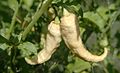 Ghost pepper
 -
 Ghost pepper
 -
 Ghost pepper
 -
 Ghost pepper
 -
 Ghost pepper
 -
 Ghost pepper
 -
 Ghost pepper

.jpg)


