Hemoglobin A: Difference between revisions
CSV import |
CSV import |
||
| Line 17: | Line 17: | ||
[[Category:Blood]] | [[Category:Blood]] | ||
{{medicine-stub}} | {{medicine-stub}} | ||
<gallery> | |||
File:1GZX_Haemoglobin.png|1GZX Haemoglobin | |||
File:Heme_synthesis.png|Heme synthesis | |||
File:Sickle_cell_01.jpg|Sickle cell 01 | |||
</gallery> | |||
Latest revision as of 20:52, 25 February 2025
Hemoglobin A (HbA) is the most common type of hemoglobin found in healthy adult humans. It is a protein that plays a crucial role in oxygen transport in the blood. Hemoglobin A is composed of four polypeptide chains, two alpha (α) chains, and two beta (β) chains, forming a tetramer (α2β2). This structure allows hemoglobin A to bind oxygen efficiently in the lungs and release it in the tissues where it is needed.
Structure and Function[edit]
The structure of hemoglobin A is essential for its function. Each of the four polypeptide chains in hemoglobin A contains a heme group, which is a porphyrin ring with an iron atom at its center. This iron atom is where oxygen binds. The ability of hemoglobin to pick up and release oxygen is influenced by the interaction between the four chains and the heme groups, a process regulated by the partial pressure of oxygen in the environment, pH levels, and the presence of 2,3-Bisphosphoglycerate (2,3-BPG).
Synthesis[edit]
Hemoglobin A synthesis occurs in the erythrocyte precursors in the bone marrow. The synthesis of the alpha and beta chains is controlled by separate genes located on different chromosomes. The alpha chains are encoded by genes on chromosome 16, while the beta chains are encoded by genes on chromosome 11. The regulation of these genes ensures that hemoglobin A is produced in the correct ratios of alpha to beta chains, which is critical for its proper function.
Clinical Significance[edit]
Alterations in the structure or production of hemoglobin A can lead to various hemoglobinopathies, such as sickle cell anemia and beta-thalassemia. These conditions result from mutations in the genes encoding the beta chains of hemoglobin A, leading to abnormal hemoglobin function or production. Diagnosis of these conditions often involves hemoglobin electrophoresis, a technique that separates different types of hemoglobin based on their charge and structure.
Hemoglobin A1c[edit]
A related compound, Hemoglobin A1c (HbA1c), is formed when glucose binds to hemoglobin A. HbA1c levels are used to measure the average blood glucose concentration over the previous two to three months and are a critical marker in the management of diabetes mellitus.

-
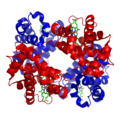 1GZX Haemoglobin
 -
 Heme synthesis
 -
 Sickle cell 01


