Red blood cell
Red blood cells, also known as RBCs, erythrocytes (from Greek erythros for "red" and kytos for "hollow", with -cyte translated as "cell" in modern usage), are the most common type of blood cell and the vertebrate organism's principal means of delivering oxygen (O2) to the body tissues via the blood flow through the circulatory system.
Structure[edit]
RBCs are cells that are flexible and can change shape to an extent. They have a biconcave disc shape, which allows for increased surface area for the diffusion of oxygen. They lack a cell nucleus and most organelles, in order to accommodate maximum space for hemoglobin.
Function[edit]
The primary function of red blood cells is to transport oxygen from the lungs to the body tissues, and carbon dioxide from the tissues to the lungs. This is possible due to the protein hemoglobin, which can bind to oxygen and carbon dioxide.
Production and lifecycle[edit]
Red blood cells are produced in the bone marrow and are released into the bloodstream when they are mature. They have a lifespan of about 120 days, after which they are broken down and recycled in the liver and spleen.
Disorders[edit]
There are several disorders that can affect red blood cells, including anemia, sickle cell disease, and thalassemia. These can lead to symptoms such as fatigue, weakness, and shortness of breath.
See also[edit]

This WikiMD article can only be edited by registered and verified editors. You can log in or register.
-
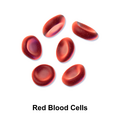 Blausen 0761 Red Blood Cells
 -
Erythrocytes in vertebrates
-
Cytological abnormalities in peripheral blood erythrocytes of penguins Pygoscelis papua
-
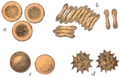 Gray 453
 -
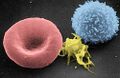 Red White Blood cells
 -
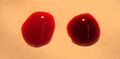 Drops of blood
 -
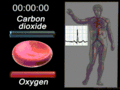 Erytrocyte deoxy to oxy
 -
Erythrocyte Membrane lipids
-
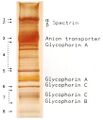 RBC Membrane Proteins SDS-PAGE gel
 -
RBC membrane major proteins
-
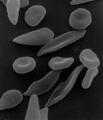 Sicklecells
 -
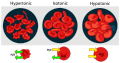 Osmotic pressure on blood cells diagram


Advertise on WikiMD — 81,000+ full articles, ~900,000 total pages, ~250 million page views. Global reach, limited time promotional rates from $1/page/day. Learn more · View stats

Translate page: - East Asian
中文,
日本,
한국어,
South Asian
हिन्दी,
தமிழ்,
తెలుగు,
Urdu,
ಕನ್ನಡ,
Southeast Asian
Indonesian,
Vietnamese,
Thai,
မြန်မာဘာသာ,
বাংলা
European
español,
Deutsch,
français,
Greek,
português do Brasil,
polski,
română,
русский,
Nederlands,
norsk,
svenska,
suomi,
Italian
Middle Eastern & African
عربى,
Turkish,
Persian,
Hebrew,
Afrikaans,
isiZulu,
Kiswahili,
Other
Bulgarian,
Hungarian,
Czech,
Swedish,
മലയാളം,
मराठी,
ਪੰਜਾਬੀ,
ગુજરાતી,
Portuguese,
Ukrainian
About WikiMD • Contact • Disclaimer • Privacy • Copyright • Site statistics
Some content and images may originate from Wikimedia Commons or Wikipedia and remain subject to their stated licenses. Unless otherwise noted, eligible WikiMD content is available under CC BY-SA 4.0.
WikiMD Wellnesspedia — Free health & wellness information for patients, students, and health professionals.


