Hemoglobin M disease: Difference between revisions
CSV import |
CSV import |
||
| (One intermediate revision by the same user not shown) | |||
| Line 1: | Line 1: | ||
{{SI}} | |||
{{Infobox medical condition | |||
| name = Hemoglobin M disease | |||
| image = [[File:Cyanosis-adult_fingertips.PNG|thumb|Cyanosis in adult fingertips]] | |||
| caption = Cyanosis in adult fingertips, a common symptom of Hemoglobin M disease | |||
| field = [[Hematology]] | |||
| symptoms = [[Cyanosis]], [[hypoxia]] | |||
| complications = [[Methemoglobinemia]] | |||
| onset = Congenital | |||
| duration = Lifelong | |||
| causes = [[Genetic mutation]] in [[hemoglobin]] | |||
| risks = Family history of the condition | |||
| diagnosis = [[Blood test]], [[genetic testing]] | |||
| differential = [[Methemoglobinemia]], other [[hemoglobinopathies]] | |||
| treatment = [[Ascorbic acid]], [[methylene blue]] | |||
| medication = [[Ascorbic acid]], [[methylene blue]] | |||
| frequency = Rare | |||
}} | |||
'''Hemoglobin M disease''' is a rare [[hemoglobinopathy]] characterized by the presence of abnormal [[hemoglobin]] molecules, specifically hemoglobin M (HbM), in the [[blood]]. This condition is a type of [[methemoglobinemia]], where an increased level of methemoglobin, a form of hemoglobin that is unable to bind [[oxygen]] effectively, is present in the blood, leading to [[oxygen deprivation]] in tissues. | '''Hemoglobin M disease''' is a rare [[hemoglobinopathy]] characterized by the presence of abnormal [[hemoglobin]] molecules, specifically hemoglobin M (HbM), in the [[blood]]. This condition is a type of [[methemoglobinemia]], where an increased level of methemoglobin, a form of hemoglobin that is unable to bind [[oxygen]] effectively, is present in the blood, leading to [[oxygen deprivation]] in tissues. | ||
==Causes== | ==Causes== | ||
Hemoglobin M disease is caused by [[genetic mutation]]s in the genes that encode the [[alpha-globin]] or [[beta-globin]] chains of hemoglobin. These mutations lead to the substitution of amino acids in the globin chains, resulting in the formation of hemoglobin M, which has a higher affinity for ferric iron (Fe3+) than the ferrous iron (Fe2+) normally found in hemoglobin. This alteration impairs the oxygen-carrying capacity of the hemoglobin molecules. | Hemoglobin M disease is caused by [[genetic mutation]]s in the genes that encode the [[alpha-globin]] or [[beta-globin]] chains of hemoglobin. These mutations lead to the substitution of amino acids in the globin chains, resulting in the formation of hemoglobin M, which has a higher affinity for ferric iron (Fe3+) than the ferrous iron (Fe2+) normally found in hemoglobin. This alteration impairs the oxygen-carrying capacity of the hemoglobin molecules. | ||
==Types== | ==Types== | ||
There are several types of Hemoglobin M disease, classified based on the specific globin chain affected by the mutation: | There are several types of Hemoglobin M disease, classified based on the specific globin chain affected by the mutation: | ||
| Line 11: | Line 27: | ||
* '''Hemoglobin M Saskatoon''' affects the beta-globin chain. | * '''Hemoglobin M Saskatoon''' affects the beta-globin chain. | ||
* '''Hemoglobin M Milwaukee''' affects the beta-globin chain. | * '''Hemoglobin M Milwaukee''' affects the beta-globin chain. | ||
==Symptoms== | ==Symptoms== | ||
The primary symptom of Hemoglobin M disease is [[cyanosis]], a bluish discoloration of the skin and mucous membranes, due to the reduced oxygen-carrying capacity of the blood. Unlike other forms of methemoglobinemia, Hemoglobin M disease does not respond to treatment with [[methylene blue]], a common therapy for reducing methemoglobin levels. | The primary symptom of Hemoglobin M disease is [[cyanosis]], a bluish discoloration of the skin and mucous membranes, due to the reduced oxygen-carrying capacity of the blood. Unlike other forms of methemoglobinemia, Hemoglobin M disease does not respond to treatment with [[methylene blue]], a common therapy for reducing methemoglobin levels. | ||
==Diagnosis== | ==Diagnosis== | ||
Diagnosis of Hemoglobin M disease involves a combination of clinical evaluation, family history, and specialized blood tests. [[Electrophoresis]] and [[spectrophotometry]] can be used to identify the presence of abnormal hemoglobin variants, including Hemoglobin M. | Diagnosis of Hemoglobin M disease involves a combination of clinical evaluation, family history, and specialized blood tests. [[Electrophoresis]] and [[spectrophotometry]] can be used to identify the presence of abnormal hemoglobin variants, including Hemoglobin M. | ||
==Treatment== | ==Treatment== | ||
There is no specific treatment for Hemoglobin M disease. Management focuses on alleviating symptoms and avoiding factors that can exacerbate oxygen deprivation. Patients are advised to avoid certain drugs and chemicals that can increase methemoglobin levels. | There is no specific treatment for Hemoglobin M disease. Management focuses on alleviating symptoms and avoiding factors that can exacerbate oxygen deprivation. Patients are advised to avoid certain drugs and chemicals that can increase methemoglobin levels. | ||
==Prognosis== | ==Prognosis== | ||
The prognosis for individuals with Hemoglobin M disease varies. Many affected individuals live normal lifespans with minimal symptoms, while others may experience significant oxygen deprivation and related complications. | The prognosis for individuals with Hemoglobin M disease varies. Many affected individuals live normal lifespans with minimal symptoms, while others may experience significant oxygen deprivation and related complications. | ||
==Gallery== | |||
<gallery> | |||
File:Lifelong_cyanosis_and_skin_color_and_arterial_blood_color_in_the_patient's_family_(cropped_A).jpg|Lifelong cyanosis and skin color | |||
File:Cyanotic_extremities_and_cyanotic_lip_discoloration.jpg|Cyanotic extremities and cyanotic lip discoloration | |||
File:1904_Hemoglobin.jpg|1904 Hemoglobin | |||
File:Lifelong_cyanosis_and_skin_color_and_arterial_blood_color_in_the_patient's_family_(cropped_BC).jpg|Lifelong cyanosis and skin color | |||
</gallery> | |||
[[Category:Blood disorders]] | [[Category:Blood disorders]] | ||
[[Category:Genetic disorders]] | [[Category:Genetic disorders]] | ||
{{medicine-stub}} | {{medicine-stub}} | ||
Latest revision as of 03:56, 6 April 2025

Editor-In-Chief: Prab R Tumpati, MD
Obesity, Sleep & Internal medicine
Founder, WikiMD Wellnesspedia &
W8MD medical weight loss NYC and sleep center NYC
| Hemoglobin M disease | |
|---|---|
 | |
| Synonyms | N/A |
| Pronounce | N/A |
| Specialty | N/A |
| Symptoms | Cyanosis, hypoxia |
| Complications | Methemoglobinemia |
| Onset | Congenital |
| Duration | Lifelong |
| Types | N/A |
| Causes | Genetic mutation in hemoglobin |
| Risks | Family history of the condition |
| Diagnosis | Blood test, genetic testing |
| Differential diagnosis | Methemoglobinemia, other hemoglobinopathies |
| Prevention | N/A |
| Treatment | Ascorbic acid, methylene blue |
| Medication | Ascorbic acid, methylene blue |
| Prognosis | N/A |
| Frequency | Rare |
| Deaths | N/A |
Hemoglobin M disease is a rare hemoglobinopathy characterized by the presence of abnormal hemoglobin molecules, specifically hemoglobin M (HbM), in the blood. This condition is a type of methemoglobinemia, where an increased level of methemoglobin, a form of hemoglobin that is unable to bind oxygen effectively, is present in the blood, leading to oxygen deprivation in tissues.
Causes[edit]
Hemoglobin M disease is caused by genetic mutations in the genes that encode the alpha-globin or beta-globin chains of hemoglobin. These mutations lead to the substitution of amino acids in the globin chains, resulting in the formation of hemoglobin M, which has a higher affinity for ferric iron (Fe3+) than the ferrous iron (Fe2+) normally found in hemoglobin. This alteration impairs the oxygen-carrying capacity of the hemoglobin molecules.
Types[edit]
There are several types of Hemoglobin M disease, classified based on the specific globin chain affected by the mutation:
- Hemoglobin M Boston affects the alpha-globin chain.
- Hemoglobin M Iwate affects the alpha-globin chain.
- Hemoglobin M Hyde Park affects the beta-globin chain.
- Hemoglobin M Saskatoon affects the beta-globin chain.
- Hemoglobin M Milwaukee affects the beta-globin chain.
Symptoms[edit]
The primary symptom of Hemoglobin M disease is cyanosis, a bluish discoloration of the skin and mucous membranes, due to the reduced oxygen-carrying capacity of the blood. Unlike other forms of methemoglobinemia, Hemoglobin M disease does not respond to treatment with methylene blue, a common therapy for reducing methemoglobin levels.
Diagnosis[edit]
Diagnosis of Hemoglobin M disease involves a combination of clinical evaluation, family history, and specialized blood tests. Electrophoresis and spectrophotometry can be used to identify the presence of abnormal hemoglobin variants, including Hemoglobin M.
Treatment[edit]
There is no specific treatment for Hemoglobin M disease. Management focuses on alleviating symptoms and avoiding factors that can exacerbate oxygen deprivation. Patients are advised to avoid certain drugs and chemicals that can increase methemoglobin levels.
Prognosis[edit]
The prognosis for individuals with Hemoglobin M disease varies. Many affected individuals live normal lifespans with minimal symptoms, while others may experience significant oxygen deprivation and related complications.
Gallery[edit]
-
 Lifelong cyanosis and skin color
 -
 Cyanotic extremities and cyanotic lip discoloration
 -
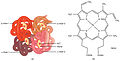 1904 Hemoglobin
 -
 Lifelong cyanosis and skin color
.jpg)


.jpg)

