Social engagement: Difference between revisions
CSV import |
CSV import |
||
| Line 36: | Line 36: | ||
{{Psychology-stub}} | {{Psychology-stub}} | ||
{{Sociology-stub}} | {{Sociology-stub}} | ||
== Social_engagement == | |||
<gallery> | |||
File:2022_-_Women_in_Tech_drinks_party_SAM_0365_(52474524823).jpg|Women in Tech drinks party | |||
File:Wikipedia_20_birthday_cake_virtual_party.jpg|Wikipedia 20th birthday cake virtual party | |||
File:Garden_party_for_wounded_men_at_the_White_House_LCCN94508210.jpg|Garden party for wounded men at the White House | |||
</gallery> | |||
Latest revision as of 05:00, 18 February 2025
Social Engagement refers to the degree of participation and involvement an individual has within their community and social network. This concept encompasses a wide range of activities, including but not limited to, interpersonal relationships, community participation, and engagement in social activities. Social engagement is considered a crucial aspect of an individual's well-being, mental health, and overall quality of life.
Definition[edit]
Social engagement is defined as the involvement in activities and relationships that provide interaction with others. These activities can be formal, such as participating in organized groups or clubs, or informal, such as spending time with friends and family. The key component of social engagement is the presence of social interaction and the establishment of meaningful relationships with others.
Importance[edit]
Research has shown that high levels of social engagement are associated with numerous health benefits. These include improved mental health, lower risks of dementia and Alzheimer's disease, reduced risk of depression, and increased longevity. Social engagement is also linked to better physical health, with socially active individuals often having lower blood pressure, reduced risk of cardiovascular diseases, and stronger immune systems.
Factors Influencing Social Engagement[edit]
Several factors can influence an individual's level of social engagement, including:
- Age: Social engagement patterns often change with age, with older adults sometimes facing challenges such as retirement, loss of peers, and health issues that can affect their social activities.
- Personality: Individuals with outgoing personalities may find it easier to engage in social activities compared to those who are more introverted.
- Health status: Physical and mental health conditions can impact one's ability to participate in social activities.
- Socioeconomic status: Economic resources can affect access to social engagement opportunities.
- Technology: The use of social media and other forms of digital communication can influence social engagement, both positively and negatively.
Strategies to Enhance Social Engagement[edit]
Enhancing social engagement, especially among vulnerable populations such as the elderly, involves various strategies:
- Encouraging participation in community activities and social groups.
- Promoting volunteerism and engagement in meaningful causes.
- Facilitating access to technology and training to use digital tools for social interaction.
- Implementing programs that foster intergenerational relationships.
Challenges[edit]
Despite its benefits, promoting social engagement can be challenging. Barriers such as physical disabilities, mental health issues, and social isolation can hinder individuals' ability to engage socially. Additionally, the digital divide can exclude certain groups, particularly older adults, from online forms of social engagement.
Conclusion[edit]
Social engagement plays a vital role in maintaining and enhancing an individual's health and well-being. By understanding the factors that influence social engagement and implementing strategies to overcome barriers, communities can foster environments that promote active and meaningful social participation for all individuals.

This article is a psychology-related stub. You can help WikiMD by expanding it!

Social_engagement[edit]
-
 Women in Tech drinks party
 -
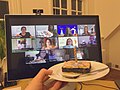 Wikipedia 20th birthday cake virtual party
 -
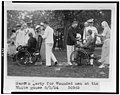 Garden party for wounded men at the White House
.jpg)


