Prevalence of tobacco use: Difference between revisions
CSV import Tags: mobile edit mobile web edit |
CSV import |
||
| Line 37: | Line 37: | ||
{{Medicine-stub}} | {{Medicine-stub}} | ||
<gallery> | |||
File:A RES 71 313 E.pdf|Prevalence of tobacco use | |||
File:Daily-smoking-prevalence-bounds.png|Prevalence of tobacco use | |||
File:Share-of-adults-who-smoke.png|Prevalence of tobacco use | |||
File:Comparing-the-share-of-men-and-women-who-are-smoking.png|Prevalence of tobacco use | |||
File:Consumption-per-smoker-per-day.png|Prevalence of tobacco use | |||
File:Smokers-as-a-percentage-of-adult-pop.jpg|Prevalence of tobacco use | |||
File:Swedishtobacco.png|Prevalence of tobacco use | |||
File:2014 NATS adult tobacco use by age.png|Prevalence of tobacco use | |||
File:CDC-chart-current cigarette use-1991-2007.png|Prevalence of tobacco use | |||
</gallery> | |||
Latest revision as of 00:35, 20 February 2025
Prevalence of Tobacco Use
The prevalence of tobacco use refers to the proportion of individuals in a population who are currently using tobacco products at a given time. Tobacco products include, but are not limited to, cigarettes, cigars, pipe tobacco, snuff, and chewing tobacco. The prevalence is an important public health indicator, as tobacco use is a leading cause of preventable diseases, including lung cancer, heart disease, and chronic obstructive pulmonary disease (COPD).
Epidemiology[edit]
The global prevalence of tobacco use varies significantly by region, age, gender, and socioeconomic status. According to the World Health Organization (WHO), there are over 1 billion tobacco users worldwide, with a higher prevalence found in males compared to females. The prevalence is also higher in low- and middle-income countries compared to high-income countries, reflecting the targeted marketing strategies of tobacco companies and differences in public health policies.
Factors Influencing Tobacco Use[edit]
Several factors contribute to the initiation and continuation of tobacco use, including:
- Socioeconomic status: Individuals from lower socioeconomic backgrounds are more likely to use tobacco.
- Peer pressure: Especially among adolescents, peer influence is a significant factor in starting to use tobacco.
- Advertising and marketing: Tobacco advertising and promotional activities can increase tobacco use by influencing social norms and perceptions.
- Genetic factors: There is evidence to suggest that genetics may play a role in nicotine dependence.
Health Consequences[edit]
Tobacco use is a major risk factor for a range of diseases. The combustion of tobacco products releases over 7,000 chemicals, many of which are toxic and can cause cancer. Health consequences of tobacco use include:
Prevention and Control[edit]
Efforts to reduce the prevalence of tobacco use include public health campaigns, taxation, smoking bans in public places, and restrictions on advertising. The Framework Convention on Tobacco Control (FCTC) is an international treaty developed by the WHO to address the global tobacco epidemic through comprehensive tobacco control measures.
See Also[edit]
References[edit]
<references/>

-
Prevalence of tobacco use
-
Prevalence of tobacco use
-
 Prevalence of tobacco use
 -
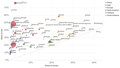 Prevalence of tobacco use
 -
 Prevalence of tobacco use
 -
 Prevalence of tobacco use
 -
 Prevalence of tobacco use
 -
 Prevalence of tobacco use
 -
 Prevalence of tobacco use


