Classical Latin: Difference between revisions
CSV import |
CSV import |
||
| Line 27: | Line 27: | ||
{{Latin-stub}} | {{Latin-stub}} | ||
<gallery> | |||
File:Rome_Colosseum_inscription_2.jpg|Classical Latin | |||
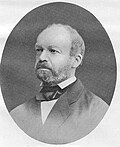
File:David_Ruhnken_-_Imagines_philologorum.jpg|Classical Latin | |||
File:Wilhelm_Siegmund_Teuffel_-_Imagines_philologorum.jpg|Classical Latin | |||
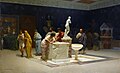
File:Bakalovich_at_Maecenas'_reception.jpg|Classical Latin | |||
File:CiceroBust.jpg|Classical Latin | |||
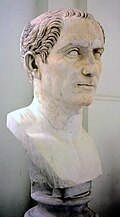
File:Giulio-cesare-enhanced_1-800x1450.jpg|Classical Latin | |||
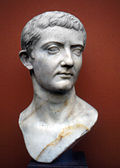
File:Tiberius_NyCarlsberg01.jpg|Classical Latin | |||
File:Marcus_Aurelius_Metropolitan_Museum.png|Classical Latin | |||
File:Germanicus1914.jpg|Classical Latin | |||
File:Seneca-berlinantikensammlung-1.jpg|Classical Latin | |||
File:Apuleius_-_Project_Gutenberg_eText_12788.png|Classical Latin | |||
</gallery> | |||
Latest revision as of 11:53, 18 February 2025
Classical Latin is the form of the Latin language used by the ancient Roman Republic and Roman Empire. It is distinguished from Vulgar Latin, which is the colloquial form spoken during the same time and later compiled into the Romance languages. Classical Latin was used in literature, official and scholarly works from around the 1st century BC to the 2nd century AD. This period is marked by the writings of Cicero, Virgil, Ovid, and Livy, among others, whose works have significantly influenced the development of Western culture and languages.
History[edit]
Classical Latin evolved from the Old Latin (or Prisca Latinitas) stages, which were recorded from the 5th century BC. The transition to Classical Latin is marked by the refinement of the language's grammar and vocabulary, largely influenced by the works of early Latin authors and the adoption of Greek stylistic features. The language flourished during the Golden Age of Latin Literature (circa 75 BC – AD 14), under the rule of Augustus.
Following the Classical period, Latin transitioned into Late Latin by the 3rd century AD, reflecting changes in pronunciation and the influence of local languages on the Roman provinces. Despite these changes, Classical Latin remained the language of learning and administration throughout the Middle Ages, until it gradually evolved into the modern Romance languages.
Grammar[edit]
Classical Latin grammar is highly inflected, indicating the relationship between words in a sentence largely through endings rather than word order. It consists of five main parts: nouns, pronouns, verbs, adjectives, and adverbs. Each noun is categorized into one of five declensions, which are groups of nouns with similar endings, and verbs are divided into four conjugations, each with its own set of endings for mood, tense, voice, person, and number.
Literature[edit]
The literature of Classical Latin is vast and varied, encompassing a wide range of genres including epic poetry, lyric poetry, tragedy, comedy, historiography, and oratory. The works of authors such as Cicero, Virgil, Horace, and Ovid not only exemplify the language's aesthetic qualities but also provide insight into the social, political, and philosophical ideas of their time.
Influence[edit]
The influence of Classical Latin extends beyond the realm of literature and language. It has been a foundational element in the development of Western philosophy, science, and law. Many terms used in modern English and other languages have their roots in Classical Latin, especially in the fields of medicine, biology, and law. Furthermore, the study of Classical Latin plays a crucial role in understanding the history, culture, and literature of ancient Rome.
See Also[edit]

-
 Classical Latin
 -
 Classical Latin
 -
 Classical Latin
 -
 Classical Latin
 -
 Classical Latin
 -
 Classical Latin
 -
 Classical Latin
 -
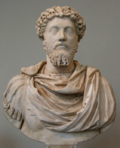 Classical Latin
 -
 Classical Latin
 -
 Classical Latin
 -
 Classical Latin


