Starch gelatinization: Difference between revisions
CSV import |
CSV import |
||
| (2 intermediate revisions by the same user not shown) | |||
| Line 1: | Line 1: | ||
'''Starch gelatinization''' is a process that occurs when | {{Short description|The process of breaking down starch molecules in the presence of water and heat}} | ||
'''Starch gelatinization''' is a process that occurs when starch granules are heated in the presence of water, causing them to swell and burst, leading to the thickening of the mixture. This process is crucial in cooking and food preparation, as it affects the texture and consistency of many foods. | |||
== | ==Process== | ||
Starch | Starch is composed of two types of molecules: [[amylose]] and [[amylopectin]]. When starch is heated in water, the granules absorb water and swell. As the temperature increases, the hydrogen bonds within the starch molecules break, allowing water to penetrate further into the granule. This causes the granules to swell even more and eventually burst, releasing the starch molecules into the surrounding water. | ||
The temperature at which gelatinization occurs varies depending on the type of starch. For example, [[cornstarch]] typically gelatinizes at a temperature range of 62–72°C (144–162°F), while [[potato starch]] gelatinizes at a lower temperature range of 58–65°C (136–149°F). | |||
The gelatinization | |||
==Factors affecting gelatinization== | |||
Several factors can influence the gelatinization process: | |||
* '''Water content''': Adequate water is necessary for gelatinization to occur. Insufficient water can lead to incomplete gelatinization and a gritty texture. | |||
* '''Temperature''': The rate and extent of gelatinization increase with temperature. However, excessive heat can cause the starch to break down, leading to a loss of thickening power. | |||
* '''Water | * '''Agitation''': Stirring can help distribute heat evenly and prevent the formation of lumps, but excessive stirring can break down the starch granules. | ||
* '''Temperature | * '''pH level''': Acidic conditions can weaken the starch granules, leading to a lower gelatinization temperature and a softer gel. | ||
* ''' | |||
* ''' | |||
==Applications== | ==Applications in cooking== | ||
Starch gelatinization | Starch gelatinization is a fundamental process in many cooking techniques. It is responsible for the thickening of sauces, gravies, and soups. In baking, it contributes to the structure and texture of products like [[bread]], [[cakes]], and [[pastries]]. | ||
In the production of [[pasta]] and [[noodles]], starch gelatinization is crucial for achieving the desired texture. The process is also important in the preparation of [[puddings]] and [[custards]], where it helps to create a smooth and creamy consistency. | |||
== | ==Related pages== | ||
Starch | * [[Starch]] | ||
* [[Amylose]] | |||
* [[Amylopectin]] | |||
* [[Gelation]] | |||
* [[Thickening agent]] | |||
[[Category:Food science]] | [[Category:Food science]] | ||
==Starch_gelatinization== | |||
<gallery> | |||
File:Նրբաբլիթը_եփելիս.jpg|Starch_gelatinization | |||
</gallery> | |||
Latest revision as of 21:40, 20 February 2025
The process of breaking down starch molecules in the presence of water and heat
Starch gelatinization is a process that occurs when starch granules are heated in the presence of water, causing them to swell and burst, leading to the thickening of the mixture. This process is crucial in cooking and food preparation, as it affects the texture and consistency of many foods.
Process[edit]
Starch is composed of two types of molecules: amylose and amylopectin. When starch is heated in water, the granules absorb water and swell. As the temperature increases, the hydrogen bonds within the starch molecules break, allowing water to penetrate further into the granule. This causes the granules to swell even more and eventually burst, releasing the starch molecules into the surrounding water.
The temperature at which gelatinization occurs varies depending on the type of starch. For example, cornstarch typically gelatinizes at a temperature range of 62–72°C (144–162°F), while potato starch gelatinizes at a lower temperature range of 58–65°C (136–149°F).
Factors affecting gelatinization[edit]
Several factors can influence the gelatinization process:
- Water content: Adequate water is necessary for gelatinization to occur. Insufficient water can lead to incomplete gelatinization and a gritty texture.
- Temperature: The rate and extent of gelatinization increase with temperature. However, excessive heat can cause the starch to break down, leading to a loss of thickening power.
- Agitation: Stirring can help distribute heat evenly and prevent the formation of lumps, but excessive stirring can break down the starch granules.
- pH level: Acidic conditions can weaken the starch granules, leading to a lower gelatinization temperature and a softer gel.
Applications in cooking[edit]
Starch gelatinization is a fundamental process in many cooking techniques. It is responsible for the thickening of sauces, gravies, and soups. In baking, it contributes to the structure and texture of products like bread, cakes, and pastries.
In the production of pasta and noodles, starch gelatinization is crucial for achieving the desired texture. The process is also important in the preparation of puddings and custards, where it helps to create a smooth and creamy consistency.
Related pages[edit]
Starch_gelatinization[edit]
-
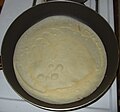 Starch_gelatinization

