Cyclin-dependent kinase 1: Difference between revisions
CSV import Tags: mobile edit mobile web edit |
CSV import |
||
| Line 25: | Line 25: | ||
{{Molecular and Cellular Biology-stub}} | {{Molecular and Cellular Biology-stub}} | ||
{{medicine-stub}} | {{medicine-stub}} | ||
<gallery> | |||
File:PBB_Protein_CDK2_image.jpg|PBB Protein CDK2 image | |||
File:Cell-cycle_control_system,_Morgan_3-34.jpg|Cell-cycle control system, Morgan 3-34 | |||
</gallery> | |||
Latest revision as of 00:58, 27 February 2025
Cyclin-dependent kinase 1 (CDK1), also known as cell division control protein 2 homolog (CDC2) or p34^CDC2, is a highly conserved protein that functions as a serine/threonine kinase, and plays a crucial role in the control of the eukaryotic cell cycle. It is a key player in orchestrating the progression of cells through the cell cycle by phosphorylating target proteins at specific times. This enzyme is most active during the mitotic phase of the cell cycle, where it forms a complex with Cyclin B, leading to cell division.
Function[edit]
CDK1, in association with its regulatory partner cyclin B, forms the maturation-promoting factor (MPF). The activation of MPF triggers the entry of the cell into mitosis, the stage of the cell cycle in which the cell divides. CDK1/cyclin B phosphorylates various proteins involved in the breakdown of the nuclear envelope, the formation of the mitotic spindle, and the segregation of chromosomes. This kinase is also involved in the control of other cell cycle checkpoints, including the transition from G2 phase to mitosis.
Regulation[edit]
The activity of CDK1 is tightly regulated by several mechanisms, including the binding of cyclins, phosphorylation, and the action of CDK inhibitors. The levels of cyclin B increase during the G2 phase and peak in mitosis, leading to the activation of CDK1. Additionally, CDK1 is activated by dephosphorylation of specific threonine and tyrosine residues by the Cdc25 phosphatase, and inhibited by phosphorylation by Wee1 kinase and Myt1 kinase. The Anaphase Promoting Complex (APC) targets cyclin B for degradation, leading to the inactivation of CDK1 and exit from mitosis.
Clinical Significance[edit]
Aberrant regulation of CDK1 has been implicated in various types of cancer, as it can lead to uncontrolled cell division. Inhibitors of CDK1 are being explored as potential therapeutic agents for cancer treatment. Additionally, because of its central role in cell cycle regulation, CDK1 is a target for studying cell aging and development.
See Also[edit]
References[edit]
<references/>
 | |
|---|---|
 |
 |
```
This template is designed to be used at the bottom of articles related to Molecular and Cellular Biology that are considered stubs, indicating that the article is a short or incomplete piece that needs to be expanded. The template automatically categorizes these articles into the "Molecular and Cellular Biology stubs" category for easy identification and further development.
-
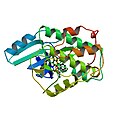 PBB Protein CDK2 image
 -
 Cell-cycle control system, Morgan 3-34


