Frequency-dependent selection: Difference between revisions
CSV import Tags: mobile edit mobile web edit |
CSV import Tags: mobile edit mobile web edit |
||
| Line 29: | Line 29: | ||
{{biology-stub}} | {{biology-stub}} | ||
<gallery> | |||
File:The_anvil_stone_of_a_thrush_-_geograph.org.uk_-_1751348.jpg|Frequency-dependent selection | |||
File:Müllerian_mimicry_among_Heliconius_species.tiff|Müllerian mimicry among Heliconius species | |||
File:G-Bartolotti_SK.jpg|Frequency-dependent selection | |||
File:Coral_snake.jpg|Coral snake | |||
</gallery> | |||
Latest revision as of 04:35, 18 February 2025
Frequency-dependent selection is an evolutionary process by which the fitness of a phenotype or genotype depends on its frequency relative to other phenotypes or genotypes in a given population. This concept is a cornerstone in the field of evolutionary biology, providing insight into how certain traits can become more or less common over time based on their interaction with the environment and other members of the population.
Overview[edit]
Frequency-dependent selection can be divided into two main types: positive frequency-dependent selection and negative frequency-dependent selection. In positive frequency-dependent selection, the fitness of a phenotype increases as it becomes more common. An example of this can be seen in certain social behaviors where being part of a larger group confers a survival advantage. On the other hand, negative frequency-dependent selection occurs when the fitness of a phenotype increases as it becomes rarer. This can help maintain genetic diversity within a population, as seen in the case of host-pathogen interactions, where rare genotypes of the host may be less susceptible to common strains of the pathogen.
Mechanisms[edit]
The mechanisms behind frequency-dependent selection are varied and can include factors such as predation, mate choice, and competition for resources. For instance, in the context of predation, a predator may focus on the most common prey phenotype, thereby giving rarer phenotypes a survival advantage (negative frequency-dependent selection). In terms of mate choice, individuals with rare traits may be more attractive to potential mates, promoting genetic diversity within the population.
Examples[edit]
One of the classic examples of frequency-dependent selection is the case of the British peppered moth (Biston betularia). Before the Industrial Revolution, the lighter-colored form of the moth was more common due to its ability to blend in with the lichen-covered trees, avoiding predation. However, as pollution killed the lichens and darkened the trees, the darker-colored form of the moth became more common due to its increased camouflage, demonstrating negative frequency-dependent selection.
Another example can be found in the self-incompatibility systems of plants, which prevent self-fertilization and promote outcrossing. In these systems, alleles that are rare in the population confer a higher fitness to the plant by increasing the likelihood of successful pollination, illustrating negative frequency-dependent selection.
Implications[edit]
Frequency-dependent selection has significant implications for the maintenance of genetic diversity, the evolution of sex ratios, and the dynamics of coevolution between species. It challenges the traditional view of natural selection, which posits that the "best" traits will always prevail, by showing that the fitness of traits can change based on their prevalence in the population.
See Also[edit]
References[edit]
<references/>

-
 Frequency-dependent selection
 -
 Müllerian mimicry among Heliconius species
 -
 Frequency-dependent selection
 -
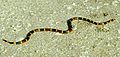 Coral snake


