Management of prostate cancer: Difference between revisions
CSV import |
CSV import |
||
| Line 37: | Line 37: | ||
[[Category:Prostate cancer]] | [[Category:Prostate cancer]] | ||
{{medicine-stub}} | {{medicine-stub}} | ||
<gallery> | |||
File:Linacprostate.jpg|Management of prostate cancer | |||
File:Prostate_spacer.jpg|Management of prostate cancer | |||
File:Prostatehormone.jpg|Management of prostate cancer | |||
</gallery> | |||
Latest revision as of 01:30, 18 February 2025
Management of Prostate Cancer
Prostate cancer is a common type of cancer that affects the prostate, a small gland that produces seminal fluid in men. The management of prostate cancer involves various treatment strategies, including surgery, radiation therapy, hormone therapy, chemotherapy, and immunotherapy. The choice of treatment depends on several factors, such as the stage and grade of the cancer, the patient's overall health, and the potential side effects of the treatment.
Diagnosis[edit]
The diagnosis of prostate cancer typically involves a prostate-specific antigen (PSA) blood test, digital rectal examination (DRE), and a biopsy of the prostate. If the PSA level is high or the DRE reveals a hard or lumpy prostate, a biopsy may be performed to confirm the diagnosis. The biopsy results are usually reported using the Gleason score, which grades the aggressiveness of the cancer.
Treatment Options[edit]
Surgery[edit]
Radical prostatectomy is a surgical procedure that involves the removal of the entire prostate gland and some surrounding tissues. It can be performed through open surgery, laparoscopic surgery, or robot-assisted surgery. The potential side effects of radical prostatectomy include urinary incontinence and erectile dysfunction.
Radiation Therapy[edit]
External beam radiation therapy (EBRT) and brachytherapy are two types of radiation therapy used in the management of prostate cancer. EBRT uses high-energy beams to kill cancer cells, while brachytherapy involves the placement of radioactive seeds directly into the prostate.
Hormone Therapy[edit]
Hormone therapy, also known as androgen deprivation therapy (ADT), is used to reduce the levels of male hormones (androgens) that stimulate the growth of prostate cancer cells. It can be achieved through surgical castration, luteinizing hormone-releasing hormone (LHRH) agonists or antagonists, or antiandrogens.
Chemotherapy[edit]
Chemotherapy is usually reserved for advanced or metastatic prostate cancer that no longer responds to hormone therapy. It involves the use of drugs to kill cancer cells or stop them from growing.
Immunotherapy[edit]
Immunotherapy is a relatively new treatment option for prostate cancer. It involves the use of drugs to stimulate the body's immune system to fight cancer cells.
Follow-up Care[edit]
Follow-up care after treatment for prostate cancer is crucial to monitor for any signs of recurrence. It typically involves regular PSA tests and physical examinations.

-
 Management of prostate cancer
 -
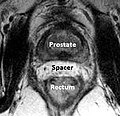 Management of prostate cancer
 -
 Management of prostate cancer


