Hexahydrocannabiphorol: Difference between revisions
CSV import |
No edit summary |
||
| (2 intermediate revisions by the same user not shown) | |||
| Line 32: | Line 32: | ||
{{pharmacology-stub}} | {{pharmacology-stub}} | ||
<gallery> | |||
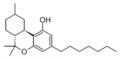
File:HHCP structure.png|Hexahydrocannabiphorol | |||
</gallery> | |||
Latest revision as of 23:48, 16 March 2025
Hexahydrocannabiphorol (also known as HHC) is a cannabinoid that is found in the Cannabis plant. It is one of the many phytocannabinoids that are produced by the plant, and it is known for its potential therapeutic effects.
Chemistry[edit]
Hexahydrocannabiphorol is a cyclic compound with a molecular formula of C21H30O2. It is a lipophilic compound, which means it is soluble in fats and oils. The structure of HHC is similar to that of other cannabinoids, with a phenolic ring and a terpenoid side chain.
Pharmacology[edit]
Like other cannabinoids, hexahydrocannabiphorol interacts with the endocannabinoid system in the human body. This system is involved in a variety of physiological processes, including pain sensation, mood, and memory. HHC binds to the CB1 receptor and CB2 receptor, which are the main receptors in the endocannabinoid system.
The exact pharmacological effects of HHC are still under investigation. However, preliminary research suggests that it may have anti-inflammatory, analgesic, and anti-anxiety effects. It may also have potential as a treatment for certain neurological disorders, such as epilepsy and multiple sclerosis.
Legal Status[edit]
The legal status of hexahydrocannabiphorol varies by country and region. In some places, it is classified as a controlled substance, while in others it is legal for medical or recreational use. It is always advisable to check the local laws before using or possessing HHC.
See Also[edit]
References[edit]
<references />

-
 Hexahydrocannabiphorol

