N-t-BOC-MDMA: Difference between revisions
CSV import Tags: mobile edit mobile web edit |
CSV import |
||
| Line 25: | Line 25: | ||
{{pharmacology-stub}} | {{pharmacology-stub}} | ||
<gallery> | |||
File:TBOC-MDMA structure.png|N-t-BOC-MDMA | |||
File:Protected-narc structure.png|N-t-BOC-MDMA | |||
</gallery> | |||
Latest revision as of 01:49, 20 February 2025
N-t-BOC-MDMA is a chemical compound that belongs to the pharmacological class of psychoactive drugs. It is a derivative of MDMA, also known as 3,4-methylenedioxymethamphetamine, a popular recreational drug known for its empathogenic effects.
Chemistry[edit]
N-t-BOC-MDMA is a tert-butoxycarbonyl protected derivative of MDMA. The tert-butoxycarbonyl (BOC) group is a protective group used in organic chemistry to protect amines. In the case of N-t-BOC-MDMA, the BOC group is attached to the nitrogen atom of the MDMA molecule. The presence of the BOC group makes the compound more stable and less reactive, which can be useful in certain chemical reactions.
Pharmacology[edit]
The pharmacological properties of N-t-BOC-MDMA are not well-studied. However, it is known that the BOC group can be removed under acidic conditions to yield MDMA. Therefore, it is possible that N-t-BOC-MDMA could act as a prodrug for MDMA, meaning that it could be converted into MDMA in the body. However, this has not been confirmed in scientific studies.
Safety[edit]
As with all psychoactive substances, the use of N-t-BOC-MDMA carries risks. These may include physical health risks, such as cardiovascular problems, as well as mental health risks, such as the potential for addiction. It is important to use such substances responsibly and under the guidance of a healthcare professional.
Legal Status[edit]
The legal status of N-t-BOC-MDMA varies by country. In many jurisdictions, it is likely to be considered a controlled substance due to its structural similarity to MDMA.
See Also[edit]

-
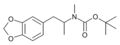 N-t-BOC-MDMA
 -
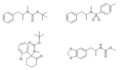 N-t-BOC-MDMA


