Teahouse: Difference between revisions
CSV import |
CSV import |
||
| Line 34: | Line 34: | ||
[[Category:Korean culture]] | [[Category:Korean culture]] | ||
{{Culture-stub}} | {{Culture-stub}} | ||
<gallery> | |||
File:Tea_room_with_interior_decoration,_Shantytown_Historical_Park,_New_Zealand.jpg|Teahouse | |||
File:Tea_house_in_Moscow.JPG|Teahouse | |||
File:Yu_Yuan.JPG|Teahouse | |||
File:Chaikhaneh_(4268013549).jpg|Teahouse | |||
File:Myanmar_Tea_House_Food.jpg|Teahouse | |||
File:Tea_house_in_winter._Machiko,_Madeira,_Portugal.jpg|Teahouse | |||
File:Berlin_belvedere_schlossgarten_charlottenburg_01_20080423.JPG|Teahouse | |||
File:Vantaa_Viinikka_-_ForsmanTea_-_2m.jpg|Teahouse | |||
</gallery> | |||
Latest revision as of 12:14, 18 February 2025
Teahouse is a term used to describe a place where people gather to drink tea and engage in social or cultural activities. Originating in East Asia, teahouses have spread across the world and have become a significant part of many cultures.
History[edit]
The concept of the teahouse originated in China during the Tang Dynasty, where they served as places for people to socialize and conduct business. The tradition spread to Japan and Korea during the Heian Period and Joseon Dynasty respectively, where they evolved to suit the unique cultural contexts of these countries.
Types of Teahouses[edit]
Chinese Teahouses[edit]
In China, teahouses are traditionally places where people gather to drink tea and engage in various forms of entertainment, such as Chinese opera, music, and storytelling.
Japanese Teahouses[edit]
In Japan, teahouses, known as chashitsu, are typically small, simple structures designed for the Japanese tea ceremony. They are often located in the gardens of private homes and are designed to promote tranquility and reflection.
Korean Teahouses[edit]
Korean teahouses, known as chatjip, are typically located in traditional Korean houses, known as hanok. They serve a variety of traditional Korean teas and snacks and often feature traditional Korean music performances.
Cultural Significance[edit]
Teahouses play a significant role in the cultures of many East Asian countries. They serve as places for social interaction, cultural exchange, and relaxation. In addition, they often serve as venues for traditional performances and ceremonies.
See Also[edit]

-
 Teahouse
 -
 Teahouse
 -
 Teahouse
 -
 Teahouse
 -
 Teahouse
 -
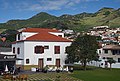 Teahouse
 -
 Teahouse
 -
 Teahouse


.jpg)


