Garden cress: Difference between revisions
CSV import Tags: mobile edit mobile web edit |
CSV import |
||
| Line 26: | Line 26: | ||
{{Plants-stub}} | {{Plants-stub}} | ||
{{Medicine-stub}} | {{Medicine-stub}} | ||
== Garden_cress == | |||
<gallery> | |||
File:Lepidium_sativum_2019-05-04_2820.jpg|Lepidium sativum | |||
File:Lepidium_sativum_seeds.jpg|Lepidium sativum seeds | |||
File:Garden_cress_timelapse.webm|Garden cress timelapse | |||
File:Img_0717_garden_cress.jpg|Garden cress | |||
File:Garden_cress_curry.jpg|Garden cress curry | |||
</gallery> | |||
Latest revision as of 21:32, 20 February 2025
Garden Angelica (Angelica archangelica), also known as wild celery or Norwegian angelica, is a biennial plant from the Apiaceae family, native to the subarctic regions of Northern Europe and Russia. It is known for its distinct aromatic scent and has been used in various forms such as a herb, a spice, and in traditional medicine.
Description[edit]
Garden Angelica typically grows up to 1-2.5 meters in height. It has broad, serrated, compound leaves and large, spherical umbels of greenish-white flowers. The plant's roots are thick and fleshy, and it has a hollow stem. It is a dichotomous plant, meaning it only flowers once before dying.
Cultivation[edit]
Garden Angelica prefers damp soil and areas with reduced sunlight, such as the banks of rivers and the coastal regions of northern Scandinavia. It is usually propagated by seeds, which are sown in late summer in a cold frame.
Uses[edit]
Garden Angelica has a variety of uses. Its stems are often candied and used as decoration for cakes and desserts. The roots, seeds, and fruit are used to flavor gin, vermouth, and various liqueurs. In traditional medicine, it has been used to treat a variety of ailments, including digestive problems and respiratory conditions.
Traditional Medicine[edit]
In traditional medicine, Garden Angelica has been used as a remedy for various ailments. The roots have been used to make a tincture that is believed to help with digestive problems. The seeds and fruit have been used to make a decoction that is believed to help with respiratory conditions.
Conservation[edit]
Garden Angelica is not currently considered a threatened species. However, like all wild plants, it is affected by changes in its natural habitat, such as the loss of wetlands due to drainage for agriculture.
See Also[edit]
This plant related article is a stub. You can help WikiMD by expanding it.

Garden_cress[edit]
-
 Lepidium sativum
 -
 Lepidium sativum seeds
 -
 Garden cress timelapse
 -
 Garden cress
 -
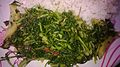 Garden cress curry


