Gene delivery: Difference between revisions
CSV import |
CSV import |
||
| Line 21: | Line 21: | ||
[[Category:Gene expression]] | [[Category:Gene expression]] | ||
{{genetics-stub}} | {{genetics-stub}} | ||
<gallery caption="Gene_delivery"> | |||
File:Bacterial_Transformation.svg|Bacterial Transformation | |||
File:Gemini_X2_generator.jpg|Gemini X2 Generator | |||
File:Genegun.jpg|Gene Gun | |||
File:Agrobacterium-tumefaciens.png|Agrobacterium tumefaciens | |||
File:Gene_therapy.jpg|Gene Therapy | |||
</gallery> | |||
Latest revision as of 04:27, 18 February 2025
Gene Complex is a term used in genetics to describe a group of genes that are physically close to each other on a chromosome and are often inherited together. These genes are usually functionally related and their close proximity allows them to be regulated together.
Overview[edit]
A gene complex can be composed of several different types of genes, including protein-coding genes, non-coding RNA genes, and pseudogenes. The genes within a complex can be functionally related, meaning they work together to perform a specific biological function. For example, the HLA gene complex is involved in the immune response, while the rRNA gene complex is involved in protein synthesis.
Function[edit]
The function of a gene complex depends on the specific genes it contains. For example, the MHC gene complex plays a crucial role in the immune system by encoding proteins that present antigens to T cells. Another example is the rRNA gene complex, which encodes the RNA components of the ribosome, the cellular machinery that synthesizes proteins.
Inheritance[edit]
Because the genes in a complex are physically close to each other on a chromosome, they are often inherited together. This phenomenon, known as genetic linkage, can have important implications for the inheritance of genetic traits and diseases. For example, certain combinations of genes within the HLA complex are associated with an increased risk of autoimmune diseases like rheumatoid arthritis and type 1 diabetes.
Research and Clinical Significance[edit]
Understanding the structure and function of gene complexes can provide important insights into the mechanisms of genetic diseases and potential therapeutic strategies. For example, research on the MHC complex has led to the development of immunotherapy treatments for cancer. Similarly, studies of the rRNA gene complex have shed light on the process of protein synthesis and its role in diseases like cancer and neurodegenerative diseases.

- Gene_delivery
-
 Bacterial Transformation
 -
 Gemini X2 Generator
 -
 Gene Gun
 -
 Agrobacterium tumefaciens
 -
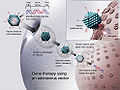 Gene Therapy


