Rulemaking: Difference between revisions
CSV import Tags: mobile edit mobile web edit |
CSV import |
||
| Line 29: | Line 29: | ||
{{law-stub}} | {{law-stub}} | ||
== Rulemaking gallery == | |||
<gallery> | |||
File:Rulemaking Approach-1 (51254291264).png|Rulemaking Approach | |||
</gallery> | |||
Latest revision as of 04:58, 3 March 2025
Rulemaking is a process that government agencies use to create, modify, or repeal regulations. It is one of the fundamental functions of the administrative state. Rulemaking is governed by the Administrative Procedure Act (APA) in the United States, and similar laws in other jurisdictions.
Overview[edit]
Rulemaking is a process that allows government agencies to implement laws passed by legislative bodies. It involves drafting and issuing rules (also known as regulations) that guide the operation of government programs. The process is designed to ensure that the public has a voice in the creation of regulations and that the rules are clear and effective.
Process[edit]
The rulemaking process typically involves several steps. First, an agency identifies a need for a new rule, often in response to changes in the law or societal conditions. The agency then drafts a proposed rule, which is published in the Federal Register (or equivalent publication in other jurisdictions) for public comment. After considering the comments, the agency may revise the rule and publish a final version. The final rule then becomes part of the Code of Federal Regulations (or equivalent regulatory code).
Public Participation[edit]
Public participation is a key aspect of the rulemaking process. The APA requires agencies to provide notice of proposed rulemaking and to give the public an opportunity to comment on the proposal. This allows interested parties to influence the content of the rule and ensures that the agency considers a range of views before finalizing the rule.
Judicial Review[edit]
Once a rule is finalized, it may be subject to judicial review. Courts can overturn a rule if they find that the agency exceeded its authority, violated the APA, or acted arbitrarily or capriciously in issuing the rule.
See Also[edit]

Rulemaking gallery[edit]
-
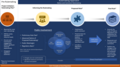 Rulemaking Approach
.png)
