Beale Street: Difference between revisions
CSV import |
CSV import |
||
| Line 24: | Line 24: | ||
{{US-road-stub}} | {{US-road-stub}} | ||
{{food-stub}} | {{food-stub}} | ||
<gallery> | |||
File:Beale Street 060523.jpg|Beale Street 060523 | |||
File:AREA OF FOURTH STREET, LOOKING WEST - Beale Street Historic District, Memphis, Shelby County, TN HABS TENN,79-MEMPH,6-3.tif|Area of Fourth Street, Looking West | |||
File:Looking East on Beale Street, Memphis, Tennessee, June 2014.jpg|Looking East on Beale Street, Memphis, Tennessee, June 2014 | |||
File:BilliardHallForColored.jpg|Billiard Hall For Colored | |||
</gallery> | |||
Latest revision as of 05:01, 3 March 2025
Beale Street is a historic street located in Memphis, Tennessee, in the United States. It stretches from the Mississippi River to East Street, a distance of approximately 1.8 miles. The street is a significant location in the city's history, as well as in the history of the blues music.
History[edit]
Beale Street was created in 1841 by entrepreneur and developer Robertson Topp, who named it for a forgotten military hero. The original name was Beale Avenue. Its western end primarily housed shops of trade merchants, who traded goods with ships along the Mississippi River, while the eastern part developed as an affluent suburb. In the 1860s, many black traveling musicians began performing on Beale. The area took on a new role as a hub for African-American culture with establishments like Church Park, a recreational and cultural park built for blacks, and the Monarch Club, the first black-owned business on Beale Street.
Music[edit]
In the early 20th century, Beale Street was filled with clubs, restaurants and shops, many of them owned by African-Americans. In 1909, W.C. Handy wrote "Mr. Crump" as a campaign song for political machine leader E. H. Crump. The song was later renamed "The Memphis Blues". Handy also wrote a song called "Beale Street Blues" in 1916 which influenced the change of the street's name from Beale Avenue to Beale Street. From the 1920s to the 1940s, Louis Armstrong, Muddy Waters, B.B. King and other blues and jazz legends played on Beale Street and helped develop the style known as Memphis Blues.
Modern Beale Street[edit]
In 1966, Beale Street was declared a National Historic Landmark for its significant contribution to the history and development of the blues. Today, the blues clubs and restaurants that line Beale Street are major tourist attractions in Memphis. Festivals and outdoor concerts frequently bring large crowds to the street and its surrounding areas.
See also[edit]
References[edit]
<references />


-
 Beale Street 060523
 -
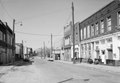 Area of Fourth Street, Looking West
 -
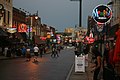 Looking East on Beale Street, Memphis, Tennessee, June 2014
 -
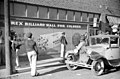 Billiard Hall For Colored


