Myoga: Difference between revisions
CSV import |
CSV import |
||
| Line 24: | Line 24: | ||
[[Category:Ginger]] | [[Category:Ginger]] | ||
{{food-stub}} | {{food-stub}} | ||
<gallery> | |||
File:ミョウガ(茗荷)(Zingiber mioga)-花 (5852495693).jpg|Myoga | |||
File:Leiden University Library - Seikei Zusetsu vol. 24, page 037 - 茗荷 - Zingiber mioga (Thunb.) Roscoe, 1804.jpg|Myoga | |||
File:Zingiber mioga.jpg|Myoga | |||
File:R0016749.JPG|Myoga | |||
File:Three-myoga-inapack-aug2-2015.jpg|Myoga | |||
</gallery> | |||
Latest revision as of 01:51, 20 February 2025
Myoga (Zingiber mioga), also known as Japanese ginger or myoga ginger, is a species of ginger native to East Asia. It is a perennial plant that is primarily grown for its flower buds and flavorful shoots, which are commonly used in traditional Japanese cuisine.
Description[edit]
Myoga is a deciduous plant that grows up to 1 meter in height. It has long, slender leaves and produces small, yellow flowers. The plant's flower buds and young shoots, which are harvested before they open, are the parts most commonly used in cooking. These parts of the plant have a unique flavor that is both sweet and slightly spicy.
Cultivation[edit]
Myoga is typically grown in shaded areas with well-drained soil. The plant prefers a humid climate and is hardy to USDA zone 7. It is propagated through division of the rhizomes, which are planted in the spring. The flower buds and shoots are harvested in the late summer and early fall.
Culinary Uses[edit]
In Japanese cuisine, myoga is often used as a garnish for dishes such as sushi, miso soup, and tempura. The flower buds can be pickled, stir-fried, or used fresh in salads. The young shoots can also be used in a variety of dishes, including soups and stir-fries.
Nutritional Value[edit]
Myoga is a good source of dietary fiber and vitamin C. It also contains small amounts of calcium, iron, and protein.
See Also[edit]

-
 Myoga
Myoga -
 Myoga
Myoga -
 Myoga
Myoga -
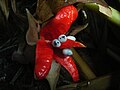 Myoga
Myoga -
 Myoga
Myoga
(Zingiber_mioga)-%E8%8A%B1_(5852495693).jpg)
_Roscoe,_1804.jpg)


