Kifli: Difference between revisions
CSV import |
CSV import |
||
| Line 26: | Line 26: | ||
[[Category:Breads]] | [[Category:Breads]] | ||
{{food-stub}} | {{food-stub}} | ||
<gallery> | |||
File:Кифле.jpg|Kifli | |||
File:Kifli_made_with_spelt_flour_(Serbian_cuisine).jpg|Kifli made with spelt flour | |||
File:Výroba_rohlíku_(25).JPG|Kifli | |||
File:Rogal.jpg|Kifli | |||
File:2018-06-23_Rožok.jpg|Kifli | |||
File:Bratislavsky_rozok.JPG|Bratislavský rožok | |||
File:Pozsonyi_kifli.jpg|Pozsonyi kifli | |||
File:Lupacik_original.jpg|Kifli | |||
File:Hoernchen.jpg|Kifli | |||
File:Výroba_rohlíku_(2).jpg|Kifli | |||
File:Výroba_rohlíku_(4).JPG|Kifli | |||
File:Výroba_rohlíku_(5).JPG|Kifli | |||
</gallery> | |||
Latest revision as of 11:04, 18 February 2025
Kifli is a traditional Central European pastry that originated from Hungary. It is a type of bread roll that is often consumed as a breakfast food, but can also be enjoyed at any time of the day. Kifli is known for its distinctive crescent shape, which is achieved by rolling the dough into a thin sheet and then folding it over several times before baking.
History[edit]
The origins of Kifli can be traced back to the 18th century in Hungary. It is believed to have been created as a symbol of victory following the defeat of the Ottoman Empire in the Battle of Vienna. The crescent shape of the Kifli is said to represent the crescent moon on the Ottoman flag.
Preparation[edit]
Kifli is made from a yeast-based dough that typically includes ingredients such as flour, milk, sugar, and eggs. The dough is rolled out into a thin sheet, cut into triangles, and then rolled up starting from the base of the triangle to form a crescent shape. The rolls are then baked until they are golden brown.
Some variations of Kifli are filled with various ingredients such as nuts, poppy seeds, or even sweet fillings like jam or chocolate. In some regions, Kifli is also topped with sesame or poppy seeds before baking.
Cultural Significance[edit]
Kifli is a staple food item in many Central European countries, particularly in Hungary, where it is often served with butter and jam for breakfast. It is also a common component of the traditional Christmas Eve dinner in some regions.
In addition to its culinary significance, Kifli also holds cultural importance in Central Europe. For instance, in Hungary, it is often used as a symbol of hospitality and is commonly served to guests during special occasions.
See Also[edit]

-
 Kifli
Kifli -
 Kifli made with spelt flour
 -
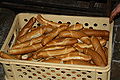 Kifli
Kifli -
 Kifli
Kifli -
 Kifli
Kifli -
 Bratislavský rožok
 -
 Pozsonyi kifli
 -
 Kifli
Kifli -
 Kifli
Kifli -
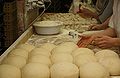 Kifli
Kifli -
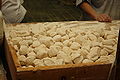 Kifli
Kifli -
 Kifli
Kifli

.jpg)
.JPG)


.jpg)
.JPG)
.JPG)
