Chakapuli: Difference between revisions
CSV import |
No edit summary |
||
| (2 intermediate revisions by the same user not shown) | |||
| Line 22: | Line 22: | ||
{{Georgian cuisine}} | {{Georgian cuisine}} | ||
{{food-stub}} | {{food-stub}} | ||
<gallery> | |||
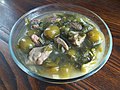
File:Chakapuli.jpg|Chakapuli | |||
</gallery> | |||
Latest revision as of 20:14, 16 March 2025
Chakapuli is a traditional Georgian stew that is widely recognized as a signature dish of the country. It is typically made from lamb or beef, along with a variety of herbs and vegetables. The dish is particularly popular during the spring season, when the ingredients are fresh and abundant.
Ingredients[edit]
The main ingredients of Chakapuli include lamb or veal, tarragon, plums, white wine, and onions. Other ingredients can include coriander, parsley, garlic, salt, and pepper. The dish is characterized by its tangy flavor, which is achieved through the use of unripe plums or plum sauce, and its green color, which comes from the generous use of tarragon and other green herbs.
Preparation[edit]
The preparation of Chakapuli involves simmering the meat in white wine with the herbs and vegetables until it is tender. The plums are added towards the end of the cooking process, giving the dish its distinctive sour taste. The stew is typically served hot and is often accompanied by Georgian bread or rice.
Cultural Significance[edit]
Chakapuli holds a special place in Georgian cuisine and culture. It is often prepared for festive occasions and gatherings, especially during the springtime when its main ingredients are in season. The dish is also a common feature on the menus of Georgian restaurants, both in Georgia and abroad.
Variations[edit]
There are several regional variations of Chakapuli in Georgia. For example, in the eastern part of the country, the dish is often made with beef instead of lamb. Some versions of the dish also include other ingredients, such as potatoes or mushrooms.
See Also[edit]
| Georgian cuisine ქართული სამზარეულო |
|---|
|
[[File:
_A_Story_of_Encounters,_2023-2024,_Art_%26_History_Museum,_Brussels.jpg) |200px|center|alt=]] |200px|center|alt=]]
|

-
 Chakapuli

