Thromboelastography: Difference between revisions
CSV import Tags: mobile edit mobile web edit |
CSV import |
||
| Line 24: | Line 24: | ||
{{stub}} | {{stub}} | ||
<gallery> | |||
File:Thromboelastography_mechanics.jpg|Thromboelastography mechanics | |||
File:Thromboelastography_parameters.png|Thromboelastography parameters | |||
File:Normal_thromboelastography.png|Normal thromboelastography | |||
File:Thromboelastography_in_hemodilution_or_clotting_factor_deficiency.png|Thromboelastography in hemodilution or clotting factor deficiency | |||
File:Thromboelastography_in_fibrinogen_deficiency.png|Thromboelastography in fibrinogen deficiency | |||
File:Thromboelastography_in_low_or_dysfunctional_platelets.png|Thromboelastography in low or dysfunctional platelets | |||
File:Thromboelastography_in_thrombosis.png|Thromboelastography in thrombosis | |||
File:Thromboelastography_in_primary_fibrinolysis.png|Thromboelastography in primary fibrinolysis | |||
File:Thromboelastography_in_secondary_fibrinolysis.png|Thromboelastography in secondary fibrinolysis | |||
</gallery> | |||
Latest revision as of 21:24, 20 February 2025
Thromboelastography (TEG) is a method used for testing the efficiency of blood coagulation. It is a test that measures the viscoelastic properties of blood under shear stress. It was invented by Helmut Hartert in 1948 while working at the University of Heidelberg.
History[edit]
Helmut Hartert invented thromboelastography in 1948 while working at the University of Heidelberg. The method was further developed and commercialized by Hartert's student, Hellmut Mehnert, and his company, Haemoscope Corporation.
Method[edit]
Thromboelastography measures the viscoelastic properties of blood under shear stress. It is used to assess the speed of clot formation, the stability of the clot, and the process of clot dissolution. The test is performed by placing a sample of blood in a heated cup, which is then rotated at a constant speed. The rotation causes the blood to clot, and the viscoelastic properties of the clot are measured by a torsion wire.
Clinical use[edit]
Thromboelastography is used in various clinical settings, including cardiac surgery, liver transplantation, and trauma care. It is also used to monitor the effects of anticoagulant therapy.
See also[edit]
References[edit]
<references />
 | |
|---|---|
 |
 |
-
 Thromboelastography mechanics
 -
 Thromboelastography parameters
 -
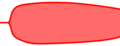 Normal thromboelastography
 -
 Thromboelastography in hemodilution or clotting factor deficiency
 -
 Thromboelastography in fibrinogen deficiency
 -
 Thromboelastography in low or dysfunctional platelets
 -
 Thromboelastography in thrombosis
 -
 Thromboelastography in primary fibrinolysis
 -
 Thromboelastography in secondary fibrinolysis


