Levator ani: Difference between revisions
CSV import Tags: mobile edit mobile web edit |
CSV import |
||
| Line 24: | Line 24: | ||
{{stub}} | {{stub}} | ||
== Levator_ani == | |||
<gallery> | |||
File:3D_Medical_Animation_Levator_Ani_structure.jpg|3D Medical Animation of Levator Ani structure | |||
File:Gray236.png|Muscles of the pelvis | |||
File:Gray402.png|Muscles of the male perineum | |||
File:1116_Muscle_of_the_Male_Perineum.png|Muscle of the Male Perineum | |||
File:Levator_ani.png|Levator ani | |||
File:Gray539.png|Muscles of the female perineum | |||
File:Gray837.png|Muscles of the pelvic floor | |||
File:Gray1076.png|Muscles of the pelvic diaphragm | |||
File:Gray1077.png|Muscles of the pelvic diaphragm, side view | |||
File:Gray1136.png|Muscles of the pelvic diaphragm, inferior view | |||
File:Human_anus-en.svg|Diagram of the human anus | |||
</gallery> | |||
Latest revision as of 12:14, 18 February 2025
Levator ani is a broad, thin muscle, situated on the side of the pelvis. It is formed from three muscle components: the puborectalis, the pubococcygeus muscle and the iliococcygeus muscle. It is part of the larger group of muscles, known as the pelvic floor, which supports the pelvic organs and spans the bottom of the pelvis.
Structure[edit]
The levator ani is a broad, thin muscle inside the pelvis, inferior to the pelvic diaphragm. It forms the main part of the pelvic floor and supports the pelvic viscera. The levator ani is divided into three parts: the puborectalis, the pubococcygeus, and the iliococcygeus. The puborectalis is the most medial part of the muscle and forms a sling around the rectum. The pubococcygeus is the middle part of the levator ani, and the iliococcygeus is the most lateral part of the muscle.
Function[edit]
The levator ani muscles are essential for providing support to the pelvic organs, including the bladder, intestines, and uterus in females. They also play a crucial role in maintaining continence, as they can contract to increase the pressure within the abdomen and prevent the passage of feces and urine.
Clinical significance[edit]
Damage to the levator ani muscle can occur during childbirth, leading to pelvic organ prolapse or urinary and fecal incontinence. Treatment for damage to the levator ani muscle includes physical therapy to strengthen the muscles and surgery to repair the damaged muscle.
See also[edit]
- Pelvic floor
- Puborectalis muscle
- Pubococcygeus muscle
- Iliococcygeus muscle
- Pelvic organ prolapse
- Urinary incontinence
- Fecal incontinence
 | |
|---|---|
 |
 |
Levator_ani[edit]
-
 3D Medical Animation of Levator Ani structure
 -
 Muscles of the pelvis
 -
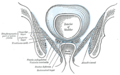 Muscles of the male perineum
 -
 Muscle of the Male Perineum
 -
 Levator ani
 -
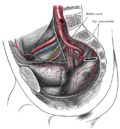 Muscles of the female perineum
 -
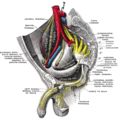 Muscles of the pelvic floor
 -
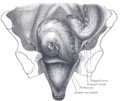 Muscles of the pelvic diaphragm
 -
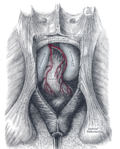 Muscles of the pelvic diaphragm, side view
 -
 Muscles of the pelvic diaphragm, inferior view
 -
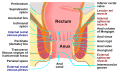 Diagram of the human anus


