Horseshoe: Difference between revisions
CSV import |
CSV import |
||
| Line 29: | Line 29: | ||
{{stub}} | {{stub}} | ||
{{dictionary-stub1}} | {{dictionary-stub1}} | ||
<gallery> | |||
File:Horseshoe.jpg|Horseshoe | |||
File:Variety_of_horseshoes,_including_aluminum_racing_plates_and_shoes_used_on_cattle_in_lower_right.jpg|Variety of horseshoes, including aluminum racing plates and shoes used on cattle in lower right | |||
File:Hipposandal-ermont.jpg|Hipposandal | |||
File:Horseshoes_from_C11.jpg|Horseshoes from C11 | |||
File:Horseshoemaker.jpg|Horseshoemaker | |||
File:Easyboot.jpg|Easyboot | |||
File:Tule_horseshoe.jpg|Tule horseshoe | |||
File:Horseshoe_lucky_on_door.jpg|Horseshoe lucky on door | |||
File:An_illustration_in_'The_True_Legend_of_St._Dunstan_and_the_Devil'.png|An illustration in 'The True Legend of St. Dunstan and the Devil' | |||
File:Rutland_County_Flag.svg|Rutland County Flag | |||
</gallery> | |||
Latest revision as of 11:49, 18 February 2025
Horseshoe Kidney is a rare congenital disorder that affects the kidneys. This condition is characterized by the fusion of the kidneys at the lower end or base, forming a U-shape or a horseshoe shape.
Overview[edit]
Horseshoe Kidney is a type of renal fusion anomaly, a term that refers to a range of conditions in which the kidneys are joined together. It is the most common type of renal fusion anomaly. The condition occurs during fetal development when the kidneys, instead of separating as they usually do, remain connected at the lower end or base. This results in a single, horseshoe-shaped kidney that is located at the base of the spine.
Symptoms[edit]
Most individuals with Horseshoe Kidney do not have any symptoms and the condition is often discovered during tests for other conditions. However, some people may experience symptoms such as pain, urinary tract infections, kidney stones, and hydronephrosis (swelling of a kidney due to a build-up of urine).
Causes[edit]
The exact cause of Horseshoe Kidney is unknown. It is thought to occur randomly during fetal development. However, some studies suggest that genetic factors may play a role.
Diagnosis[edit]
Horseshoe Kidney is typically diagnosed through imaging tests such as ultrasound, CT scan, or MRI. These tests can show the abnormal shape and position of the horseshoe kidney.
Treatment[edit]
Treatment for Horseshoe Kidney is usually not necessary unless the individual is experiencing symptoms or complications. In such cases, treatment may include medications to manage pain and infections, procedures to remove kidney stones, or surgery to correct the position of the kidney or to treat complications.
See Also[edit]
 | This medical article is a stub. You can help WikiMD by expanding the page. |
-
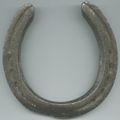 Horseshoe
 -
 Variety of horseshoes, including aluminum racing plates and shoes used on cattle in lower right
 -
 Hipposandal
 -
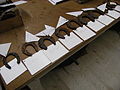 Horseshoes from C11
 -
 Horseshoemaker
 -
 Easyboot
 -
 Tule horseshoe
 -
 Horseshoe lucky on door
 -
 An illustration in 'The True Legend of St. Dunstan and the Devil'
 -
 Rutland County Flag


