Autism-friendly: Difference between revisions
CSV import |
CSV import Tags: mobile edit mobile web edit |
||
| Line 32: | Line 32: | ||
{{stub}} | {{stub}} | ||
== Autism-friendly == | |||
<gallery> | |||
File:Opening a window to the autistic brain.jpg|Opening a window to the autistic brain | |||
File:Ty Nant, Ringland Circle, Newport - geograph.org.uk - 1592795.jpg|Ty Nant, Ringland Circle, Newport | |||
File:Malibu California surf adaptive recreation.jpg|Malibu California surf adaptive recreation | |||
File:CDP Images Workshop children with autism.jpg|CDP Images Workshop children with autism | |||
File:Autism spectrum infinity awareness symbol.svg|Autism spectrum infinity awareness symbol | |||
</gallery> | |||
Latest revision as of 01:37, 20 February 2025
Autism-friendly refers to environments, services, and products that are accessible and appropriate for individuals with Autism Spectrum Disorder (ASD). These environments are designed to minimize sensory overload, provide clear communication, and allow for predictability and routine.
Understanding Autism-Friendly Environments[edit]
Autism-friendly environments are designed to accommodate the unique sensory sensitivities that many individuals with autism experience. These environments often feature reduced noise levels, soft lighting, and minimal visual distractions. They may also provide quiet spaces for individuals to retreat to if they become overwhelmed.
Creating Autism-Friendly Environments[edit]
Creating an autism-friendly environment involves understanding the unique needs and preferences of individuals with autism. This can include:
- Reducing sensory overload: Many individuals with autism are hypersensitive to sensory stimuli. This can be addressed by reducing noise levels, using soft lighting, and minimizing visual distractions.
- Providing clear communication: Clear, concise communication can help individuals with autism understand what is expected of them. This can be achieved through the use of visual aids, simple language, and repetition.
- Allowing for predictability and routine: Many individuals with autism thrive on routine and predictability. Providing a predictable environment can help reduce anxiety and improve overall comfort.
Autism-Friendly Services and Products[edit]
In addition to environments, there are also a variety of services and products designed to be autism-friendly. These can include:
- Autism-friendly events: These are events that are designed to be accessible and enjoyable for individuals with autism. They often feature reduced noise levels, designated quiet areas, and trained staff.
- Autism-friendly products: These are products that are designed with the needs of individuals with autism in mind. They can include sensory toys, weighted blankets, and noise-cancelling headphones.
See Also[edit]
- Autism Spectrum Disorder
- Sensory overload
- Sensory toys
- Weighted blankets
- Noise-cancelling headphones
 |
 |
Autism-friendly[edit]
-
 Opening a window to the autistic brain
 -
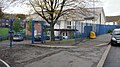 Ty Nant, Ringland Circle, Newport
 -
 Malibu California surf adaptive recreation
 -
 CDP Images Workshop children with autism
 -
 Autism spectrum infinity awareness symbol


