Factor X deficiency: Difference between revisions
No edit summary Tag: visualeditor-wikitext |
CSV import |
||
| (One intermediate revision by the same user not shown) | |||
| Line 1: | Line 1: | ||
{{Infobox medical condition | |||
| name | {{Infobox medical condition | ||
| | | name = Factor X deficiency | ||
| image = <!-- Image removed --> | |||
| caption = | |||
| caption | | field = Hematology | ||
| symptoms = Easy bruising, nosebleeds, bleeding gums, heavy menstrual periods | |||
| field | | complications = Hemorrhage | ||
| symptoms | | onset = Congenital or acquired | ||
| complications | | duration = Lifelong | ||
| onset | | causes = Genetic mutation, liver disease, vitamin K deficiency | ||
| duration | | diagnosis = Blood tests, genetic testing | ||
| treatment = Plasma transfusion, prothrombin complex concentrates | |||
| causes | | frequency = Rare | ||
| diagnosis | |||
| treatment | |||
| frequency | |||
}} | }} | ||
'''Factor X deficiency''' is a rare [[bleeding disorder]] characterized by a deficiency of [[Factor X]], a [[protein]] involved in the [[blood coagulation]] process. This condition can be either [[congenital]] or [[acquired]]. | |||
== | == Causes == | ||
Factor X deficiency can be caused by [[genetic mutations]] that affect the production or function of Factor X. It can also be acquired due to conditions such as [[liver disease]], [[vitamin K deficiency]], or the use of certain [[anticoagulant medications]]. | |||
== Symptoms == | |||
Individuals with Factor X deficiency may experience symptoms such as: | |||
* Easy [[bruising]] | |||
* [[Nosebleeds]] | |||
* [[Bleeding gums]] | |||
* Heavy [[menstrual periods]] | |||
* Prolonged [[bleeding]] after injury or surgery | |||
== | == Diagnosis == | ||
Diagnosis of Factor X deficiency involves [[blood tests]] to measure the activity of Factor X. [[Genetic testing]] may also be conducted to identify mutations in the [[F10 gene]]. | |||
== Treatment == | |||
Treatment options for Factor X deficiency include: | |||
* [[Plasma transfusion]] to provide the missing clotting factors | |||
* Administration of [[prothrombin complex concentrates]] | |||
* [[Vitamin K]] supplementation in cases of deficiency | |||
== Complications == | |||
Without proper management, individuals with Factor X deficiency are at risk of severe [[hemorrhage]], which can be life-threatening. | |||
== | == See also == | ||
* [[Coagulation disorders]] | |||
* [[Hemophilia]] | |||
* [[Von Willebrand disease]] | |||
== References == | |||
{{Reflist}} | |||
== | |||
== External links == | == External links == | ||
* [https://www.hemophilia.org/ National Hemophilia Foundation] | |||
* [https://www.rarediseases.org/ National Organization for Rare Disorders] | |||
[[Category: | [[Category:Coagulation system]] | ||
[[Category: | [[Category:Genetic disorders]] | ||
[[Category:Hematology]] | |||
[[Category:Rare diseases]] | |||
<gallery> | |||
File:Autosomal recessive - en.svg|Factor X deficiency | |||
</gallery> | |||
Latest revision as of 00:41, 20 February 2025
| Factor X deficiency | |
|---|---|
| Synonyms | N/A |
| Pronounce | N/A |
| Specialty | N/A |
| Symptoms | Easy bruising, nosebleeds, bleeding gums, heavy menstrual periods |
| Complications | Hemorrhage |
| Onset | Congenital or acquired |
| Duration | Lifelong |
| Types | N/A |
| Causes | Genetic mutation, liver disease, vitamin K deficiency |
| Risks | N/A |
| Diagnosis | Blood tests, genetic testing |
| Differential diagnosis | N/A |
| Prevention | N/A |
| Treatment | Plasma transfusion, prothrombin complex concentrates |
| Medication | N/A |
| Prognosis | N/A |
| Frequency | Rare |
| Deaths | N/A |
Factor X deficiency is a rare bleeding disorder characterized by a deficiency of Factor X, a protein involved in the blood coagulation process. This condition can be either congenital or acquired.
Causes[edit]
Factor X deficiency can be caused by genetic mutations that affect the production or function of Factor X. It can also be acquired due to conditions such as liver disease, vitamin K deficiency, or the use of certain anticoagulant medications.
Symptoms[edit]
Individuals with Factor X deficiency may experience symptoms such as:
- Easy bruising
- Nosebleeds
- Bleeding gums
- Heavy menstrual periods
- Prolonged bleeding after injury or surgery
Diagnosis[edit]
Diagnosis of Factor X deficiency involves blood tests to measure the activity of Factor X. Genetic testing may also be conducted to identify mutations in the F10 gene.
Treatment[edit]
Treatment options for Factor X deficiency include:
- Plasma transfusion to provide the missing clotting factors
- Administration of prothrombin complex concentrates
- Vitamin K supplementation in cases of deficiency
Complications[edit]
Without proper management, individuals with Factor X deficiency are at risk of severe hemorrhage, which can be life-threatening.
See also[edit]
References[edit]
External links[edit]
-
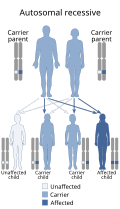 Factor X deficiency

