Human placental lactogen: Difference between revisions
CSV import |
No edit summary |
||
| Line 34: | Line 34: | ||
{{Endocrinology-stub}} | {{Endocrinology-stub}} | ||
{{Medicine-stub}} | {{Medicine-stub}} | ||
<gallery> | <gallery> | ||
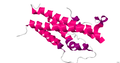
File:1Z7C.pdb.png|1Z7C.pdb | File:1Z7C.pdb.png|1Z7C.pdb | ||
</gallery> | </gallery> | ||
Latest revision as of 00:00, 17 March 2025
Human placental lactogen (hPL), also known as human chorionic somatomammotropin (HCS), is a hormone produced by the placenta during pregnancy. It plays a crucial role in regulating the metabolic state of the mother to support the growing fetus.
Structure and Function[edit]
Human placental lactogen is a polypeptide hormone, structurally similar to human growth hormone (hGH) and prolactin (PRL). It is produced by the syncytiotrophoblast cells of the placenta and is released into the maternal circulation.
The primary function of hPL is to modify the metabolic state of the mother during pregnancy. It increases the availability of glucose and amino acids for the fetus by promoting lipolysis and inhibiting glucose uptake in maternal tissues. This hormone also stimulates the production of insulin and insulin-like growth factor in the mother, leading to increased insulin resistance and higher blood glucose levels.
Role in Pregnancy[edit]
Human placental lactogen plays a significant role in fetal development and maternal adaptation to pregnancy. It promotes the growth of the mammary glands in preparation for lactation and has a luteotropic effect, maintaining the function of the corpus luteum and the production of progesterone, which is essential for the maintenance of pregnancy.
In addition, hPL may have immunomodulatory effects, contributing to the maternal immune tolerance of the fetus.
Clinical Significance[edit]
Abnormal levels of hPL can indicate complications in pregnancy. Low levels may suggest placental insufficiency, while high levels can be associated with conditions such as gestational diabetes and placental overgrowth disorders like placental chorioangioma and hydatidiform mole.
Prenatal diagnosis of these conditions can be achieved through the measurement of hPL levels in maternal serum or urine.
See Also[edit]
References[edit]
<references group="" responsive="1"></references>

This article is a endocrinology stub. You can help WikiMD by expanding it!

-
 1Z7C.pdb

