Human coronavirus 229E: Difference between revisions
CSV import |
No edit summary |
||
| (One intermediate revision by the same user not shown) | |||
| Line 26: | Line 26: | ||
{{medicine-stub}} | {{medicine-stub}} | ||
<gallery> | |||
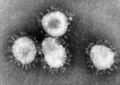
File:Human_coronavirus_229E.png|Human coronavirus 229E | |||
</gallery> | |||
Latest revision as of 00:00, 17 March 2025

Human coronavirus 229E (HCoV-229E) is a species of coronavirus that infects humans and bats. It is an enveloped, positive-sense, single-stranded RNA virus which enters its host cell by binding to the ACE2 receptor. First identified in the 1960s, HCoV-229E is a cause of the common cold and is associated with a range of respiratory symptoms, from the mild common cold to severe lower respiratory tract infections.
Classification[edit]
HCoV-229E belongs to the genus Alphacoronavirus, which is part of the Coronaviridae family. This family includes other significant human pathogens, such as SARS-CoV, responsible for the severe acute respiratory syndrome (SARS), and SARS-CoV-2, the virus causing the COVID-19 pandemic.
Transmission[edit]
Transmission of HCoV-229E occurs through respiratory droplets, close personal contact, and touching surfaces contaminated with the virus. The virus can spread from an infected person to others through coughing and sneezing, close personal contact such as touching or shaking hands, and touching an object or surface with the virus on it, then touching the mouth, nose, or possibly the eyes.
Symptoms[edit]
The symptoms of HCoV-229E infection are similar to other upper respiratory infections, including runny nose, sore throat, cough, and fever. In most cases, these symptoms are mild and self-limiting. However, in immunocompromised individuals, the elderly, or those with underlying respiratory conditions, HCoV-229E can cause more severe respiratory illness, such as pneumonia.
Prevention and Treatment[edit]
There is no specific treatment for HCoV-229E infections. Management involves supportive care to relieve symptoms, such as rest, fluid intake, and over-the-counter fever reducers and pain relievers. Prevention strategies include regular hand washing with soap and water, avoiding close contact with people who are sick, and practicing good respiratory hygiene, such as covering the mouth and nose with a tissue or the elbow when coughing or sneezing.
Research and Vaccine Development[edit]
Research on HCoV-229E has contributed to the broader understanding of coronavirus biology, pathogenesis, and the immune response. This research has been instrumental in the rapid development of diagnostic tests and vaccine strategies, particularly in response to the COVID-19 pandemic. However, as of now, there is no specific vaccine available for HCoV-229E.
See Also[edit]

-
 Human coronavirus 229E
