Swarf: Difference between revisions
CSV import Tags: mobile edit mobile web edit |
CSV import |
||
| (One intermediate revision by the same user not shown) | |||
| Line 1: | Line 1: | ||
Swarf | |||
Swarf, also known as chips or filings, refers to the shavings, chippings, turnings, or other fragments of material removed by a cutting or grinding tool during a machining process. Swarf is typically produced in metalworking, woodworking, and other manufacturing processes where material is removed to shape a workpiece. | |||
==Characteristics== | |||
Swarf can vary greatly in size, shape, and material depending on the machining process and the material being worked on. Common materials that produce swarf include metals such as steel, aluminum, and brass, as well as plastics and wood. | |||
== | ===Types of Swarf=== | ||
Swarf | Swarf can be classified based on its shape and size: | ||
* ''' | * '''[[Continuous Chips]]''': These are long, continuous strands of material, often produced during turning or milling operations on ductile materials. | ||
* ''' | * '''[[Discontinuous Chips]]''': These are small, broken pieces of material, typically formed when machining brittle materials or using interrupted cutting processes. | ||
* ''' | * '''[[Powdery Swarf]]''': Fine particles or dust, often produced during grinding or sanding operations. | ||
==Production== | |||
Swarf is produced during various machining operations, including: | |||
* ''' | * '''[[Turning]]''': A process where a cutting tool removes material from a rotating workpiece. | ||
* ''' | * '''[[Milling]]''': A process where a rotating cutting tool removes material from a stationary workpiece. | ||
* ''' | * '''[[Drilling]]''': A process where a rotating drill bit removes material to create holes. | ||
* '''[[Grinding]]''': A process where an abrasive wheel removes material to finish surfaces. | |||
== | ==Handling and Safety== | ||
Swarf can pose several hazards in the workplace, including: | |||
* '''[[Sharp Edges]]''': Swarf can have sharp edges that can cause cuts or puncture wounds. | |||
Swarf | * '''[[Fire Hazard]]''': Fine swarf, especially from metals like magnesium or aluminum, can be highly flammable. | ||
* '''[[Inhalation Risk]]''': Fine particles can be inhaled, posing respiratory risks. | |||
Proper handling and disposal of swarf are essential to maintain a safe working environment. This includes using protective equipment, such as gloves and masks, and ensuring proper ventilation and disposal methods. | |||
==Recycling and Disposal== | |||
Swarf can often be recycled, especially metal swarf, which can be melted down and reused. Recycling swarf helps reduce waste and conserve resources. However, swarf must be properly cleaned and separated from cutting fluids and other contaminants before recycling. | |||
==Environmental Impact== | |||
Improper disposal of swarf can lead to environmental pollution. Metal swarf can contaminate soil and water if not disposed of correctly. Therefore, many industries follow strict guidelines for the disposal and recycling of swarf to minimize environmental impact. | |||
==Also see== | |||
* [[Machining]] | |||
* [[Metalworking]] | |||
* [[Recycling]] | |||
* [[Occupational safety and health]] | |||
{{Metalworking}} | |||
{{Recycling}} | |||
[[Category:Metalworking]] | |||
[[Category:Manufacturing]] | [[Category:Manufacturing]] | ||
[[Category: | [[Category:Recycling]] | ||
== Swarf gallery == | |||
<gallery> | |||
File:SwarfSamples.jpg|Swarf Samples | |||
File:A song of fire and metal.jpg|A Song of Fire and Metal | |||
</gallery> | |||
Latest revision as of 05:08, 3 March 2025
Swarf
Swarf, also known as chips or filings, refers to the shavings, chippings, turnings, or other fragments of material removed by a cutting or grinding tool during a machining process. Swarf is typically produced in metalworking, woodworking, and other manufacturing processes where material is removed to shape a workpiece.
Characteristics[edit]
Swarf can vary greatly in size, shape, and material depending on the machining process and the material being worked on. Common materials that produce swarf include metals such as steel, aluminum, and brass, as well as plastics and wood.
Types of Swarf[edit]
Swarf can be classified based on its shape and size:
- Continuous Chips: These are long, continuous strands of material, often produced during turning or milling operations on ductile materials.
- Discontinuous Chips: These are small, broken pieces of material, typically formed when machining brittle materials or using interrupted cutting processes.
- Powdery Swarf: Fine particles or dust, often produced during grinding or sanding operations.
Production[edit]
Swarf is produced during various machining operations, including:
- Turning: A process where a cutting tool removes material from a rotating workpiece.
- Milling: A process where a rotating cutting tool removes material from a stationary workpiece.
- Drilling: A process where a rotating drill bit removes material to create holes.
- Grinding: A process where an abrasive wheel removes material to finish surfaces.
Handling and Safety[edit]
Swarf can pose several hazards in the workplace, including:
- Sharp Edges: Swarf can have sharp edges that can cause cuts or puncture wounds.
- Fire Hazard: Fine swarf, especially from metals like magnesium or aluminum, can be highly flammable.
- Inhalation Risk: Fine particles can be inhaled, posing respiratory risks.
Proper handling and disposal of swarf are essential to maintain a safe working environment. This includes using protective equipment, such as gloves and masks, and ensuring proper ventilation and disposal methods.
Recycling and Disposal[edit]
Swarf can often be recycled, especially metal swarf, which can be melted down and reused. Recycling swarf helps reduce waste and conserve resources. However, swarf must be properly cleaned and separated from cutting fluids and other contaminants before recycling.
Environmental Impact[edit]
Improper disposal of swarf can lead to environmental pollution. Metal swarf can contaminate soil and water if not disposed of correctly. Therefore, many industries follow strict guidelines for the disposal and recycling of swarf to minimize environmental impact.
Also see[edit]
Swarf gallery[edit]
-
 Swarf Samples
 -
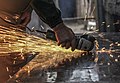 A Song of Fire and Metal


