Ring chromosome: Difference between revisions
CSV import |
CSV import |
||
| Line 29: | Line 29: | ||
[[Category:Chromosomal abnormalities]] | [[Category:Chromosomal abnormalities]] | ||
{{genetics-stub}} | {{genetics-stub}} | ||
<gallery> | |||
File:Human_karyotype_from_bladder_carcinoma,_including_ring_chromosome.jpg|Human karyotype from bladder carcinoma, including ring chromosome | |||
File:NLM_ring_chromosome.jpg|NLM ring chromosome | |||
</gallery> | |||
Latest revision as of 00:51, 27 February 2025
Ring chromosome is a type of abnormal chromosome structure that occurs when the ends of a chromosome join together to form a ring. This can happen with any chromosome and can lead to a variety of genetic disorders, depending on which genes are affected.
Formation[edit]
Ring chromosomes are formed when a chromosome undergoes a break in both arms and the broken ends fuse together to form a circular structure. This can occur spontaneously during cell division or can be caused by certain types of DNA damage or genetic mutation.
Effects[edit]
The effects of a ring chromosome can vary widely, depending on which chromosome is involved and where the breaks occur. In some cases, the ring chromosome can lead to a loss of genetic material, which can result in a variety of genetic disorders. In other cases, the ring chromosome may have no effect on the individual's health.
Some of the disorders associated with ring chromosomes include Ring Chromosome 20 Syndrome, which can cause epilepsy and learning difficulties, and Ring Chromosome 14 Syndrome, which can cause developmental delay and a variety of physical abnormalities.
Diagnosis[edit]
Diagnosis of a ring chromosome typically involves genetic testing, including karyotyping and fluorescence in situ hybridization (FISH). These tests can identify the presence of a ring chromosome and determine which chromosome is involved.
Treatment[edit]
There is currently no cure for disorders caused by ring chromosomes. Treatment typically involves managing the symptoms and complications of the disorder. This can include physical therapy, speech therapy, and occupational therapy for developmental delays, and medication for seizures and other physical symptoms.
See also[edit]

-
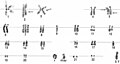 Human karyotype from bladder carcinoma, including ring chromosome
 -
 NLM ring chromosome


