Cruelty-free: Difference between revisions
CSV import |
CSV import |
||
| Line 25: | Line 25: | ||
{{Cruelty-free}} | {{Cruelty-free}} | ||
{{Ethics-stub}} | {{Ethics-stub}} | ||
<gallery> | |||
File:Wistar_rat.jpg|Wistar rat | |||
File:Bayliss-reconstruction.jpg|Bayliss reconstruction | |||
File:OpenMoji-black_1F407.svg|OpenMoji black rabbit | |||
</gallery> | |||
Latest revision as of 23:51, 24 February 2025
Cruelty-free refers to products, especially cosmetics and personal care items, that are manufactured or developed by methods that do not involve experimentation on animals. This concept also extends to household products, clothing, and other goods. The movement towards cruelty-free products has gained momentum as a part of ethical consumerism, with an increasing number of individuals seeking products that align with their values regarding animal welfare.
Definition and Standards[edit]
Cruelty-free products are those that have been produced without any form of animal testing at any stage of product development. Companies may use alternative testing methods, such as computer modeling or in vitro testing, to ensure product safety and efficacy. The certification of cruelty-free products is often denoted by logos such as the Leaping Bunny or PETA's cruelty-free bunny, which indicate that a product meets the standards set by these organizations for being free from animal testing.
Regulations and Certifications[edit]
Several countries have implemented regulations to limit or ban animal testing for cosmetics. The European Union, for example, has a ban on both the testing of cosmetics on animals and the sale of cosmetics tested on animals, regardless of where the testing occurred. Certifications by organizations like Cruelty-Free International (Leaping Bunny), PETA, and Choose Cruelty-Free (Australia) provide guidelines and audits to ensure companies adhere to their standards for being cruelty-free.
Challenges and Controversies[edit]
One of the challenges in the cruelty-free movement is the lack of a universally accepted definition of what constitutes "cruelty-free." Some products may be labeled as cruelty-free if the final product was not tested on animals, even if individual ingredients were. Additionally, some companies may claim their products are cruelty-free if they do not conduct animal testing themselves, despite contracting other companies to perform tests on their behalf.
Impact and Consumer Choices[edit]
The rise in consumer demand for cruelty-free products has led to an increase in the availability of these products across various sectors. Consumers are encouraged to research and support companies that are transparent about their animal testing policies and seek certifications from reputable organizations. Choosing cruelty-free products can contribute to the reduction of animal suffering and promote the development of alternative testing methods.
See Also[edit]
| Cruelty-free topics | ||||||||
|---|---|---|---|---|---|---|---|---|
This Cruelty-free related article is a stub.
|

-
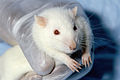 Wistar rat
 -
 Bayliss reconstruction
 -
 OpenMoji black rabbit


