List of WHO fungal priority pathogens: Difference between revisions
CSV import |
CSV import |
||
| (One intermediate revision by the same user not shown) | |||
| Line 33: | Line 33: | ||
[[Category:Infectious diseases]] | [[Category:Infectious diseases]] | ||
{{Incomplete list}} | {{Incomplete list}} | ||
{{NoIndexOrphaned}} | |||
<gallery> | |||
File:Cryptococcus neoformans growth on SDA and Urease test Positive.jpg|Cryptococcus neoformans growth on SDA and Urease test Positive | |||
File:Candida-auris 2016-250px.jpg|Candida auris | |||
File:Aspergillus fumigatus (257 15).jpg|Aspergillus fumigatus | |||
File:Candida albicans under microscope.jpg|Candida albicans under microscope | |||
File:Histoplasma capsulatum (8538519681).jpg|Histoplasma capsulatum | |||
File:Histoplasma capsulatum var. duboisii. PHIL 4221 lores.jpg|Histoplasma capsulatum var. duboisii | |||
File:Acremonium falciforme PHIL 4167 lores.jpg|Acremonium falciforme | |||
File:Aspergillus flavus in petri dish.png|Aspergillus flavus in petri dish | |||
File:Aspergillus nidulans.jpg|Aspergillus nidulans | |||
File:Cladophialophora bantiana UAMH10767.jpg|Cladophialophora bantiana | |||
File:Curvularia geniculata 01.jpg|Curvularia geniculata | |||
File:Curvularia lunata.jpg|Curvularia lunata | |||
</gallery> | |||
Latest revision as of 01:02, 20 February 2025
List of WHO Fungal Priority Pathogens is a compilation by the World Health Organization (WHO) identifying fungi that pose significant threats to public health. This list is part of WHO's efforts to prioritize and coordinate global health responses to fungal infections, which are a growing concern due to their increasing resistance to antifungal medications and their impact on vulnerable populations. The list categorizes fungi based on their urgency of research and development needs for new and effective treatments.
Overview[edit]
Fungal infections cause a wide range of conditions, from skin and mucosal infections to life-threatening systemic diseases. These infections are particularly dangerous for immunocompromised individuals, such as those with HIV/AIDS, cancer patients undergoing chemotherapy, organ transplant recipients, and individuals taking immunosuppressive drugs. The WHO's list aims to highlight fungi that require urgent attention to prevent outbreaks and ensure effective treatments are available.
Priority Pathogens[edit]
The WHO categorizes fungal pathogens into three groups based on the level of threat they pose and the urgency for research and development of new treatments:
Critical Priority[edit]
1. Candida auris - A multidrug-resistant yeast causing severe infections in hospitalized patients, including bloodstream, wound, and ear infections. It has emerged as a significant global health threat due to its resistance to multiple antifungal drugs. 2. Cryptococcus neoformans - A fungus that can cause cryptococcosis, a potentially deadly infection, especially in individuals with weakened immune systems, such as those with HIV/AIDS.
High Priority[edit]
1. Aspergillus fumigatus - A mold that can cause aspergillosis, a range of conditions affecting the respiratory system. It is particularly concerning for its resistance to azole antifungal drugs, the primary treatment option. 2. Candida albicans - A common cause of fungal infections worldwide, including thrush and genital yeast infections. While generally treatable, it can cause more severe systemic infections in vulnerable populations. 3. Candida glabrata and other non-albicans Candida species - These species are increasingly recognized for their role in candidiasis and their varying levels of resistance to antifungal medications.
Medium Priority[edit]
1. Pneumocystis jirovecii - A fungus causing Pneumocystis pneumonia (PCP), particularly in individuals with weakened immune systems, such as those with HIV/AIDS. 2. Mucorales (Mucormycosis-causing fungi) - A group of molds causing mucormycosis, a rare but serious infection affecting the sinuses, brain, or lungs. It can occur in people with weakened immune systems or uncontrolled diabetes.
Research and Development Needs[edit]
The WHO emphasizes the need for research and development in several key areas to combat these priority fungal pathogens, including: - Development of new, effective, and accessible antifungal medications. - Improved diagnostic tools for rapid and accurate detection of fungal infections. - Enhanced surveillance systems to monitor the spread and resistance patterns of fungal pathogens.
Conclusion[edit]
The List of WHO Fungal Priority Pathogens serves as a critical tool for global health organizations, researchers, and policymakers to prioritize efforts in combating fungal infections. By focusing on the most dangerous fungi, the WHO aims to stimulate research and development activities that can lead to more effective treatments and control measures, ultimately reducing the global burden of fungal diseases. This list is incomplete; you can help WikiMD by expanding it.
-
 Cryptococcus neoformans growth on SDA and Urease test Positive
 -
 Candida auris
 -
 Aspergillus fumigatus
 -
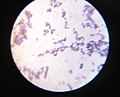 Candida albicans under microscope
 -
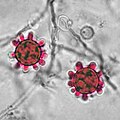 Histoplasma capsulatum
 -
 Histoplasma capsulatum var. duboisii
 -
 Acremonium falciforme
 -
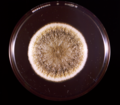 Aspergillus flavus in petri dish
 -
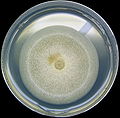 Aspergillus nidulans
 -
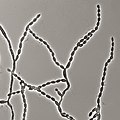 Cladophialophora bantiana
 -
 Curvularia geniculata
 -
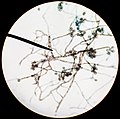 Curvularia lunata


.jpg)

.jpg)


