Veterinary medicine: Difference between revisions
No edit summary |
CSV import Tags: mobile edit mobile web edit |
||
| Line 62: | Line 62: | ||
[[Category:Veterinary medicine]] | [[Category:Veterinary medicine]] | ||
{{stub}} | {{stub}} | ||
<gallery> | |||
File:Veterinary_Outreach_Hawaye_Kebele_Ethiopia.jpg|Veterinary outreach in Hawaye Kebele, Ethiopia | |||
File:PKahun_LV2.jpg|Veterinary medicine in ancient Egypt | |||
File:HippiatricaParisGr2244Fo74v.jpg|Hippiatrica manuscript | |||
File:Eye_operation_on_a_horse.jpg|Eye operation on a horse | |||
File:Bourgelat.png|Claude Bourgelat, founder of veterinary schools | |||
File:Veterinarian_performing_surgery.jpg|Veterinarian performing surgery | |||
File:US_and_South_African_Army_Vet_Technicians_Prepare_Dog_for_Spaying.jpg|US and South African Army vet technicians prepare dog for spaying | |||
File:Kitten_check_up_at_Guantanamo.jpg|Kitten check-up at Guantanamo | |||
</gallery> | |||
Latest revision as of 12:25, 18 February 2025
Veterinary Medicine[edit]
Veterinary medicine is a specialized field of study that concentrates on the prevention, diagnosis, treatment, and management of diseases, disorders, and injuries in animals. Although it often emphasizes the health and well-being of domestic animals, the scope of veterinary medicine extends to various species, both wild and domesticated.
Introduction[edit]
Veterinary medicine has deep historical roots, with the well-being of animals being intertwined with human societies for millennia. As communities began to domesticate animals for agricultural and companionship purposes, the need for dedicated professionals to attend to animal health became paramount.
Branches of Veterinary Medicine[edit]
Veterinary medicine is multifaceted, catering to different types of animals and their diverse needs:
- Companion Animal or Small Animal Veterinary Medicine: Focuses on pets like dogs, cats, and birds.
- Equine Veterinary Medicine: Dedicated to the health of horses.
- Farm or Large Animal Veterinary Medicine: Concerns animals raised for production, such as cattle, sheep, and pigs.
- Zoological Medicine: Involves the care of wild animals, either in captivity (like in zoos) or in their natural habitats.
- Veterinary Pathology: Studies animal diseases and the mechanisms involved.
- Research Veterinary Medicine: Focuses on research for the advancement of medical, dental, health, and veterinary science.
Diagnosis and Treatment[edit]
Like human medical practitioners, veterinarians employ a variety of diagnostic tools, including:
- Physical examinations
- X-rays
- Ultrasound
- Lab tests
Treatment modalities can range from surgical interventions, pharmaceutical treatments, physical therapy, to preventive measures like vaccinations.
Importance of Veterinary Medicine[edit]
- Public health: Veterinarians play a crucial role in controlling zoonotic diseases, which are diseases that can be transmitted from animals to humans.
- Food safety: Veterinarians ensure that the animals we raise for food are healthy, reducing the risk of disease transmission.
- Environmental conservation: By caring for wild species and understanding their health needs, veterinarians contribute to conservation efforts.
- Animal welfare: Veterinarians ensure that animals, both domesticated and wild, receive proper care and treatment.
Education and Licensing[edit]
To become a veterinarian, an individual typically undergoes:
- A four-year undergraduate degree
- Four years in a veterinary medicine program culminating in a Doctor of Veterinary Medicine (DVM or VMD) degree.
- Licensing examination in the respective region or country
Continuing education is crucial as the field of veterinary medicine is continuously evolving.
Ethical Considerations[edit]
Veterinarians often grapple with ethical dilemmas, from considerations about euthanasia, to animal welfare in agricultural systems, to the conservation of endangered species.
See Also[edit]
 | |
|---|---|
 |
 |
-
 Veterinary outreach in Hawaye Kebele, Ethiopia
 -
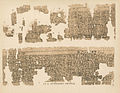 Veterinary medicine in ancient Egypt
 -
 Hippiatrica manuscript
 -
 Eye operation on a horse
 -
 Claude Bourgelat, founder of veterinary schools
 -
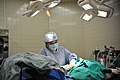 Veterinarian performing surgery
 -
 US and South African Army vet technicians prepare dog for spaying
 -
 Kitten check-up at Guantanamo


