Callystatin A: Difference between revisions
CSV import |
CSV import |
||
| Line 30: | Line 30: | ||
File:CallystatinA-modular.jpg|Callystatin A Modular Structure | File:CallystatinA-modular.jpg|Callystatin A Modular Structure | ||
File:CallystatinA-mechanismofbiosynthesis.jpg|Callystatin A Mechanism of Biosynthesis | File:CallystatinA-mechanismofbiosynthesis.jpg|Callystatin A Mechanism of Biosynthesis | ||
</gallery> | |||
<gallery> | |||
File:CallystatinA.jpg|Callystatin A structure | |||
File:Callyspongia.png|Callyspongia sponge | |||
File:CallystatinA-inhibition.jpg|Callystatin A inhibition | |||
File:Nuclearexport-inhibition.jpg|Nuclear export inhibition | |||
File:CallystatinA-modular.jpg|Callystatin A modular structure | |||
File:CallystatinA-mechanismofbiosynthesis.jpg|Callystatin A mechanism of biosynthesis | |||
</gallery> | </gallery> | ||
Latest revision as of 10:57, 18 February 2025
Callystatin A is a natural product derived from the marine sponge, Callyspongia species. It is a potent inhibitor of protein phosphatase 2A (PP2A), a type of enzyme that plays a crucial role in cell cycle regulation and apoptosis. Callystatin A has been studied for its potential use in cancer therapy due to its ability to inhibit cell growth and induce apoptosis in cancer cells.
Chemical Structure[edit]
Callystatin A is a complex polyketide with a unique structure that includes a 26-membered macrolide ring, a 2,2-dimethyl-3-hydroxy-7-octynoic acid (Dhoya) moiety, and a rare 2-amino-8-oxo-3,6-dioxaoctanoic acid (Aoda) unit. The structure of Callystatin A was first elucidated in 1997 by the research group of Yoshito Kishi at Harvard University.
Biological Activity[edit]
Callystatin A is a potent inhibitor of PP2A, with an IC50 value in the nanomolar range. PP2A is a serine/threonine phosphatase that is involved in many cellular processes, including cell cycle regulation and apoptosis. Inhibition of PP2A by Callystatin A leads to cell cycle arrest and apoptosis in cancer cells.
Potential Therapeutic Applications[edit]
Due to its potent PP2A inhibitory activity, Callystatin A has potential therapeutic applications in cancer treatment. Studies have shown that Callystatin A can inhibit the growth of various cancer cell lines, including breast cancer, lung cancer, and leukemia cells. However, further research is needed to fully understand the mechanism of action of Callystatin A and to evaluate its potential as a therapeutic agent in clinical settings.
See Also[edit]
References[edit]
<references />

-
 Callystatin A
 -
 Callystatin A Inhibition
 -
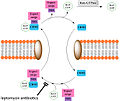 Nuclear Export Inhibition
 -
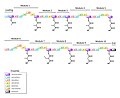 Callystatin A Modular Structure
 -
 Callystatin A Mechanism of Biosynthesis


-
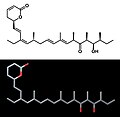 Callystatin A structure
 -
Callyspongia sponge
-
Callystatin A inhibition
-
Nuclear export inhibition
-
Callystatin A modular structure
-
Callystatin A mechanism of biosynthesis

