Chromosome 6: Difference between revisions
CSV import |
CSV import Tags: mobile edit mobile web edit |
||
| Line 26: | Line 26: | ||
{{Genetics-stub}} | {{Genetics-stub}} | ||
<gallery> | |||
File:Human_male_karyotpe_high_resolution_-_Chromosome_6_cropped.png|Chromosome 6 cropped from high resolution karyotype | |||
File:Human_male_karyotpe_high_resolution_-_Chromosome_6.png|Chromosome 6 from high resolution karyotype | |||
File:Human_chromosome_6_ideogram_vertical.svg|Ideogram of human chromosome 6 | |||
File:Human_chromosome_06_-_400_550_850_bphs.png|Chromosome 6 at different banding resolutions | |||
</gallery> | |||
Latest revision as of 04:57, 18 February 2025
Chromosome 6 is one of the 23 pairs of chromosomes in humans. People normally have two copies of this chromosome. Chromosome 6 spans more than 170 million base pairs (the building material of DNA) and represents between 5.5 and 6% of the total DNA in cells.
Structure[edit]
Chromosome 6, like other chromosomes, contains DNA that is tightly coiled and compacted to form the structures known as chromosomes. This chromosome is characterized by its specific length and gene content. It has a unique banding pattern that is visible under a microscope when the chromosome is stained. This pattern is used to identify the location of specific genes.
Genetic Information[edit]
Chromosome 6 contains about 1,000 to 1,100 genes that are responsible for various bodily functions. These genes include those involved in the immune system, development, and metabolism. Among the most important genes on chromosome 6 are the HLA (human leukocyte antigen) genes, which play a critical role in the immune system by helping the body distinguish between its own cells and foreign invaders.
Health Implications[edit]
Alterations in the number or structure of chromosome 6 can lead to various health conditions. These can include, but are not limited to, autosomal recessive polycystic kidney disease, Ehlers-Danlos syndrome, and Parkinson's disease. Additionally, certain types of chromosomal abnormalities involving chromosome 6 can lead to increased susceptibility to infections, autoimmune disorders, and cancers.
Research[edit]
Research on chromosome 6 has been extensive, focusing on understanding the functions of its genes and the implications of genetic variations. Studies have explored the relationship between specific alleles on chromosome 6 and disease susceptibility, as well as the chromosome's role in development and aging.
See Also[edit]
References[edit]
<references/>

-
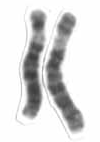 Chromosome 6 cropped from high resolution karyotype
 -
 Chromosome 6 from high resolution karyotype
 -
 Ideogram of human chromosome 6
 -
 Chromosome 6 at different banding resolutions


