Field-reversed configuration: Difference between revisions
CSV import Tags: mobile edit mobile web edit |
CSV import |
||
| Line 30: | Line 30: | ||
[[Category:Fusion power]] | [[Category:Fusion power]] | ||
{{physics-stub}} | {{physics-stub}} | ||
<gallery> | |||
File:Field-Reversed_Configuration.svg|Field-reversed configuration diagram | |||
File:A_comparison_of_an_FRC_and_A_Spheromak.png|Comparison of an FRC and a Spheromak | |||
File:Info-graphic_on_the_Field_Reversed_Configuration.png|Info-graphic on the Field Reversed Configuration | |||
File:Particle_Trajectory_in_an_FRC.png|Particle trajectory in an FRC | |||
</gallery> | |||
Latest revision as of 04:47, 18 February 2025
Field-reversed configuration (FRC) is a type of plasma confinement system that uses magnetic fields to contain a plasma. It is a unique form of magnetic confinement fusion that has been studied for several decades due to its potential for high energy efficiency and compact design.
Overview[edit]
The FRC is a toroidal (doughnut-shaped) plasma configuration where the magnetic field lines are reversed, or 'flipped', in the center of the device. This is achieved by inducing a electric current in the plasma which generates a magnetic field opposite to the externally applied field. The result is a configuration where the plasma is confined by its own magnetic field, rather than by the walls of the device.
History[edit]
The concept of the FRC was first proposed in the 1950s by scientists at the Los Alamos National Laboratory. Early experiments were conducted in the 1960s and 1970s, with significant advancements made in the 1980s and 1990s. Today, several research institutions and companies around the world are actively studying and developing FRC-based fusion systems.
Advantages and Challenges[edit]
The main advantage of the FRC is its potential for high energy efficiency. Because the plasma is confined by its own magnetic field, it can potentially achieve higher temperatures and pressures than other confinement systems. This could make FRC-based fusion systems more efficient and cost-effective.
However, there are also significant challenges to developing practical FRC-based fusion systems. These include maintaining the stability of the plasma, achieving the necessary conditions for fusion, and dealing with the high heat and radiation levels produced by the fusion reactions.
Current Research[edit]
Several research institutions and companies are currently studying and developing FRC-based fusion systems. These include Tri Alpha Energy, which is developing a commercial FRC-based fusion power plant, and the Princeton Plasma Physics Laboratory, which is conducting fundamental research on FRC physics and technology.
See Also[edit]

-
 Field-reversed configuration diagram
 -
Comparison of an FRC and a Spheromak
-
Info-graphic on the Field Reversed Configuration
-
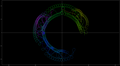 Particle trajectory in an FRC


